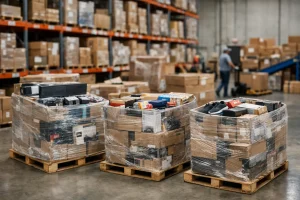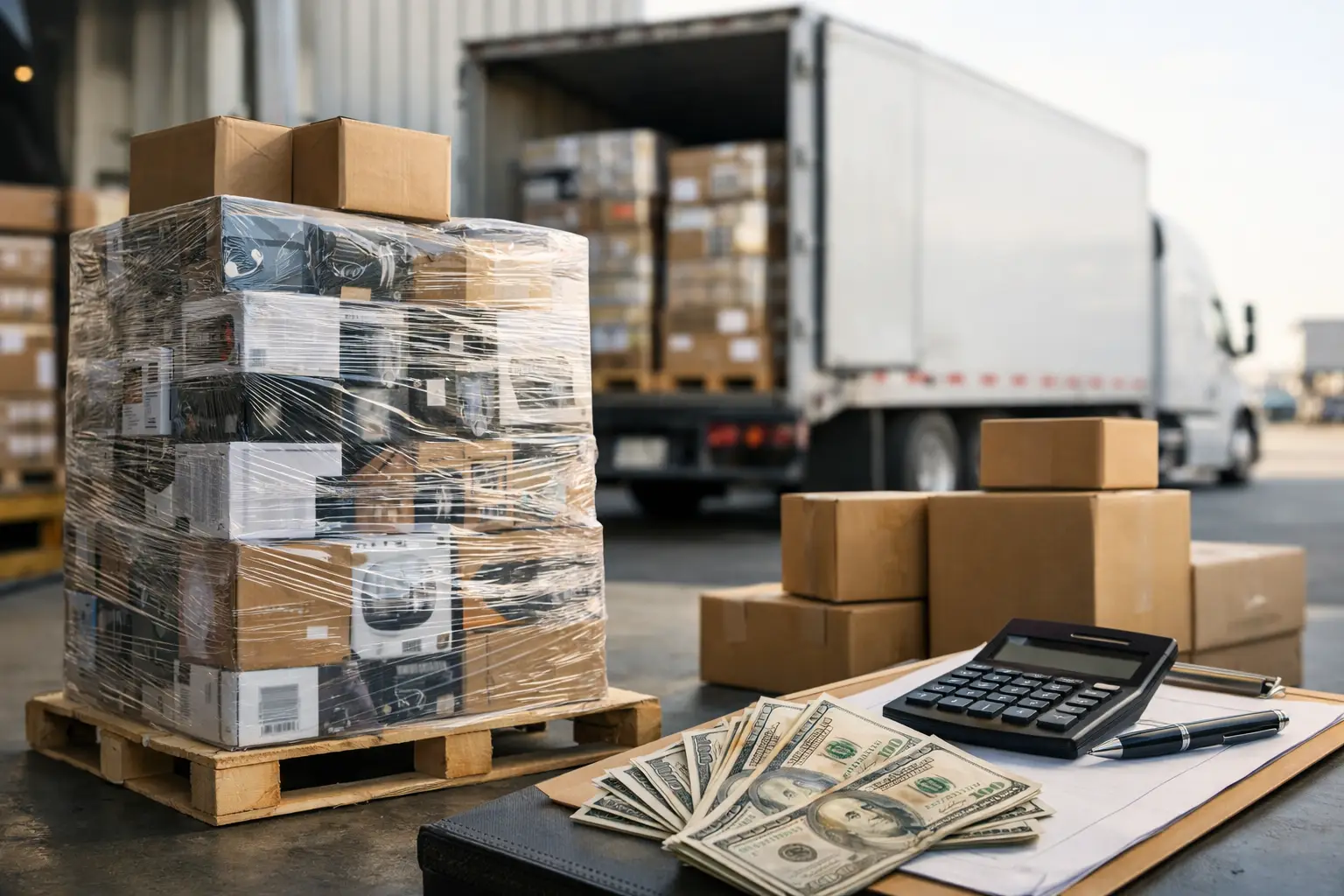
A truckload can change your numbers fast – in a good way or a painful one.
That is why experienced resellers do not look at liquidation truckloads as just “more inventory.” They look at them as a margin play, a cash flow decision, and a logistics test all at once. If you buy well, sort fast, and price with discipline, a single load can feed online listings, local sales, flea market inventory, and store shelves for weeks or months.
If you buy the wrong load, though, the discount on paper disappears into freight, labor, storage, unsellable units, and slow-moving leftovers. That is the real difference between beginners who get excited by volume and buyers who build repeatable profit.
What liquidation truckloads really are
Liquidation truckloads are bulk lots of overstock, shelf pulls, customer returns, closeouts, or mixed general merchandise sold at a steep discount compared to original retail. Instead of buying one pallet at a time, you are purchasing inventory at a larger scale, usually with the goal of lowering your per-unit cost and getting more product variety in one shipment.
For resellers, that scale matters. A truckload can create better buying power than smaller orders, especially when you already know your sales channels. You may be stocking an online store, replenishing a discount retail location, filling bins for live sales, or breaking inventory down into individual listings. The format works because one purchase can support multiple resale strategies.
Not every truckload is built the same, and that is where many buyers get tripped up. One load may be mostly clean overstock in a single category. Another may be a mixed load with excellent brand names but a higher percentage of returns. The opportunity is real, but so is the spread in quality, condition, and work required.
Why liquidation truckloads attract serious resellers
The biggest reason is margin. The larger the buy, the more room you usually have to spread freight and handling costs across the inventory. That can create stronger resale pricing flexibility, especially if you sell through more than one channel.
Speed is another factor. A truckload gives you inventory depth. Instead of scrambling to source a few cases here and there, you can buy enough merchandise to keep listings active, shelves filled, and repeat customers coming back. For small-to-mid-sized retailers, that consistency matters just as much as the discount.
There is also variety. Mixed truckloads can give you broad coverage across home goods, tools, toys, beauty, apparel, electronics, and household essentials. That can be a major advantage if your customer base buys across categories or if you need to test what moves best before narrowing your purchasing strategy.
The trade-off is simple. Higher volume can improve profit potential, but it also increases the cost of mistakes. A good truckload can strengthen your business. A poorly matched one can tie up cash and space.
How to evaluate liquidation truckloads before you buy
The smartest buyers start with the resale plan, not the manifest.
If you know where the inventory is going, you can judge whether the load makes sense. An online seller with limited warehouse space should not buy the same type of truckload as a bin store operator or a local discount shop. The products, condition grades, packaging quality, and prep time all affect how fast you can turn goods into sales.
Check the inventory mix against your sales model
A mixed truckload sounds attractive because of the variety, but variety only helps if your business can process it. If your team is built to test electronics, list high-SKU items, and handle customer questions, a load with tech products and accessories may fit. If you need easy, fast-turn merchandise for local cash sales, everyday household goods and general merchandise may be a better match.
The right question is not “How much retail value is in this load?” It is “Can I sell this inventory at my speed and with my labor setup?”
Understand condition and salvage risk
Overstock and shelf pulls usually require less processing than return-heavy loads. Returns can still be profitable, but they demand better sorting, testing, repackaging, and realistic pricing. If you do not have the workflow for that, the cheaper buy may end up costing more.
This is where dependable supplier guidance matters. In a category where risk is part of the business, clear communication about load type, category mix, and order expectations can save buyers from expensive assumptions.
Factor in freight, space, and labor
Truckloads do not stop costing money once you pay for them. You need space to receive them, labor to break them down, and a plan for trash, damaged goods, and slow movers. A strong buy can still underperform if your warehouse gets clogged or your team cannot process the load fast enough.
For many resellers, that means starting with pallets, building a repeat sales pattern, and then scaling into truckloads once the back-end operation is ready. Bigger is not always better on day one.
When truckloads make more sense than pallets
Pallets are often the better entry point for newer buyers because the commitment is lower and the learning curve is easier to manage. You can test categories, figure out your sell-through rate, and learn how different conditions affect resale value without tying up too much cash.
Truckloads start making more sense when you already know three things: what categories move for you, how quickly you can process inventory, and how much volume your sales channels can absorb.
At that point, the scale starts working in your favor. Your freight cost per item often improves. Your available inventory stays more consistent. You can sort better product into premium channels and move lower-priced goods through discount bins, bundles, or local outlets. That is where the margin spread gets more interesting.
This is also where a reseller-first supplier adds value. A company like Wholesale Pallet Liquidators is built around helping buyers scale from smaller purchases into larger bulk orders with straightforward ordering, fast shipping, and inventory options that match different resale models.
Common mistakes buyers make with liquidation truckloads
The first mistake is chasing retail value instead of resale reality. A load can show a high original retail figure and still underperform if the items are wrong for your market, too inconsistent in condition, or too slow to list.
The second mistake is underestimating processing time. Every extra minute spent sorting, testing, cleaning, or repacking inventory chips away at profit. Some buyers only calculate cost of goods and freight, then wonder why the margins feel thin after two weeks of labor.
The third mistake is buying without an exit plan for lower-grade merchandise. Not every item in a truckload belongs on a marketplace listing. Some should be bundled, some should go to local discount sales, and some should be cleared fast just to keep cash moving.
The fourth mistake is treating every truckload as a one-time gamble. The strongest resellers do the opposite. They track sell-through, note category performance, compare load quality across orders, and refine their buying over time. That is how liquidation turns from a side hustle into a system.
How profitable buyers approach the numbers
Profitable buyers stay conservative up front. They do not assume every item is sellable, every branded product is complete, or every category will move at full comp pricing.
They build in room for defects, missing parts, markdowns, storage costs, and labor. They also think in tiers. The best items recover a large share of the buy. Mid-tier items create steady volume. Lower-value units still matter because they can be bundled or moved through faster channels.
That layered thinking is what makes liquidation truckloads work. You are not trying to win on every single unit. You are trying to make the total load perform after all the real-world costs hit.
For new buyers, this often means being more selective, not more aggressive. A cleaner truckload in a proven category can outperform a larger “deal” that creates too much work and too many unknowns.
The real advantage is repeatability
One profitable truckload is exciting. A repeatable buying process is what actually builds a business.
That means sourcing inventory you can trust, buying categories your customers already respond to, and keeping enough discipline to say no when a load looks cheap but does not fit your model. The goal is not just to buy discounted goods. The goal is to buy inventory that turns fast enough to bring you back for the next load with more confidence and better data.
That is where liquidation gets interesting for serious resellers. The discount opens the door, but the real payoff comes from buying with a plan, moving product quickly, and building a supply rhythm that supports growth instead of guessing. Start there, and a truckload becomes less of a risk and more of a business tool.
OUR AVAILABLE PALLETS
Bulk Accessories Pallets For Sales | Wholesale Mixed Accessories
Bulk Accessories Pallets For Sales | Wholesale Mixed Accessories
Funko Pop Pallets | Wholesale Collectible Vinyl Figures
Cheap Wholesale Video Game Pallets
EarPods Pallets Wholesale – Bulk Deals for Resellers
General Merchandise Pallets Wholesale
Wholesale Hunting & Fishing Gear Pallets
Liquidation Power Tool Pallets
Makeup and Beauty Pallets Wholesale
Mixed Electronics Pallet Wholesale
Pokémon Card Pallets Wholesale | Sealed Pokémon TCG Pallets
Sports Card Pallet Wholesale Premium Bulk Trading Cards
Stanley Cups Pallet | Bulk Insulated Tumblers for Resale
Detergent Pallets Wholesale | Bulk Laundry Supplies
Wholesale Kitchen Appliances Pallet