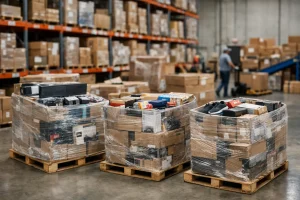
If you’ve ever seen a liquidation pallet priced at a few hundred dollars and wondered whether the resale value is actually there, the short answer is yes – but not on every pallet, and not by accident.
That is the real answer to can you make money flipping pallets. You can, but profits come from buying the right inventory, understanding resale channels, and moving items quickly enough that your cash is not tied up for months. A pallet can be a strong business asset or an expensive guessing game. The difference is usually in the buy.
Can You Make Money Flipping Pallets in 2025?
Yes, people make money flipping pallets every day. Small online sellers use them to stock eBay stores, marketplace listings, flea market booths, discount shops, and local retail spaces. More experienced resellers buy repeatedly because liquidation can create a margin that traditional wholesale often cannot match.
The reason the model works is simple. Retailers need a path to move overstock, shelf pulls, customer returns, closeouts, and seasonal inventory. Resellers step in, buy at a discount, sort the goods, and sell items individually or in smaller lots. If you can consistently buy below market value and sell at a realistic pace, there is money to be made.
But there is no fixed profit formula. One pallet might contain easy-to-sell household goods and branded small appliances. Another might be packed with slow-moving items, damaged packaging, or products with thin resale demand. Flipping pallets is not magic. It is inventory buying.
What Actually Makes a Pallet Profitable?
The first factor is purchase quality. A cheap pallet is not always a profitable pallet. If the merchandise is too random, too damaged, or too difficult to test, the low upfront cost will not save the deal. Buyers who last in this business focus less on the sticker price and more on resale potential.
The second factor is category fit. Some product types turn faster than others. Tools, home goods, beauty, toys, household essentials, and brand-name general merchandise usually give resellers more selling options than highly specialized products. If you are a beginner, broad-demand items are often easier to move than niche inventory.
The third factor is your selling method. A seller with an established online store, local customer base, and repeat buyers can squeeze more value from the same pallet than someone listing a few items casually on weekends. Your systems matter as much as your sourcing.
Shipping and handling also affect profit more than many beginners expect. Large or fragile items may look valuable on paper but cost more to move, store, and return. A pallet full of compact, recognizable products often works better than one packed with oversized merchandise that creates headaches.
The Biggest Mistake New Buyers Make
Most beginners overestimate resale value and underestimate the work.
They see a manifest or a category label and mentally add up top-market prices. Then reality hits. Some items need cleaning. Some need testing. Some are incomplete. Some sell only if priced aggressively. Some sit for weeks. The profit is still there, but it rarely matches the fantasy number buyers create before the pallet arrives.
That does not mean you should avoid liquidation. It means you should buy with a margin cushion. If a pallet only works when every item is perfect and every listing sells at the high end, it is probably too risky.
A better approach is to calculate from the downside. Assume a percentage of items will be unsellable, another percentage will be low-margin, and only part of the pallet will produce strong returns. If the numbers still make sense, you are looking at a healthier buy.
How Resellers Make Money Flipping Pallets
There are a few practical ways pallet buyers create profit, and the best method depends on time, space, and sales experience.
Some break everything down and sell item by item online. This usually produces the highest gross return, but it also takes the most labor. You need photos, listings, storage, customer service, and shipping supplies.
Others split pallets into smaller bundles and resell locally. That might mean grouped tool lots, beauty product bundles, or mixed household boxes sold through local marketplaces or discount outlets. The per-item return may be lower, but turnover can be much faster.
More established retailers often use pallets to keep shelves full with low-cost inventory. In that model, profit comes from repeat restocking and fast cash conversion rather than maximizing every single item.
There is also a hybrid approach, which is often the smartest move. Sell the strongest products individually, bundle the mid-tier products, and liquidate the leftovers quickly so they do not eat up storage space.
What to Look for Before You Buy
If you are trying to answer can you make money flipping pallets for your own business, start by looking at inventory through a reseller lens, not a bargain-hunter lens.
Ask whether the items have clear demand. Ask whether the brands are recognizable. Ask whether the category matches where you already sell. Ask whether the condition level makes sense for your skill set. Returns pallets may offer higher upside, but they also require more sorting, testing, and tolerance for loss.
Manifested pallets can help you estimate value, but manifests are not a profit guarantee. They are a starting point. You still need to think about sell-through rate, average realized price, and how quickly your buyers will actually move the inventory.
Supplier reliability matters too. In liquidation, trust is part of the margin. Buyers need accurate descriptions, responsive service, clear ordering terms, and dependable shipping. That is one reason many resellers stick with established sources instead of constantly chasing a slightly lower price somewhere new. A repeatable supply relationship usually beats one lucky buy.
For buyers who want a steady source of mixed inventory and branded overstock, Wholesale Pallet Liquidators is built around that reseller model, with category variety and ordering support that can help both first-time and repeat buyers make more informed purchases.
How Much Money Can You Really Make?
This depends on your buy cost, category, condition, and sales process. A small side-hustle seller may make a few hundred dollars net from a solid pallet after fees and expenses. A more experienced reseller with strong listing systems and multiple sales channels can turn the same pallet into more.
The key point is not the biggest possible number. It is consistency. One profitable pallet does not build a business. Repeatable buying, realistic pricing, and disciplined reinvestment do.
Think in terms of margin and speed together. A pallet that nets less per unit but sells out fast can outperform one with higher theoretical profit that sits for two months. Cash flow matters. Storage matters. Your time matters.
Is Flipping Pallets Worth It for Beginners?
Usually, yes – if you start small and stay selective.
Liquidation pallets can be one of the more accessible ways to enter reselling because you do not need to create your own product, manufacture inventory, or commit to a traditional wholesale contract. You can buy, sort, list, and learn quickly. That makes it attractive for side hustlers and small retailers trying to grow inventory on a budget.
The trade-off is uncertainty. You need to be comfortable with some variability in condition, assortment, and resale timing. If you need every unit to be identical and every margin to be predictable, pallet flipping may feel messy. But if you are flexible, organized, and willing to learn what your market actually buys, it can become a very workable inventory model.
Beginners usually do best when they avoid overreaching. Start with categories you understand. Buy inventory that is easier to inspect and resell. Track every cost, including supplies, platform fees, gas, and labor. The numbers get clearer fast when you treat it like a business from day one.
The Real Answer
So, can you make money flipping pallets? Yes – and plenty of resellers do. But the money is not in the pallet by itself. It is in buying with discipline, selling with speed, and choosing inventory that fits your market.
A good pallet gives you opportunity. A smart reseller turns that opportunity into margin. If you stay focused on demand, condition, and turnaround, pallet flipping can move from side income to a repeatable revenue stream.
OUR AVAILABLE PALLETS
Bulk Accessories Pallets For Sales | Wholesale Mixed Accessories
Bulk Accessories Pallets For Sales | Wholesale Mixed Accessories
Funko Pop Pallets | Wholesale Collectible Vinyl Figures
Cheap Wholesale Video Game Pallets
EarPods Pallets Wholesale – Bulk Deals for Resellers
General Merchandise Pallets Wholesale
Wholesale Hunting & Fishing Gear Pallets
Liquidation Power Tool Pallets
Makeup and Beauty Pallets Wholesale
Mixed Electronics Pallet Wholesale
Pokémon Card Pallets Wholesale | Sealed Pokémon TCG Pallets
Sports Card Pallet Wholesale Premium Bulk Trading Cards
Stanley Cups Pallet | Bulk Insulated Tumblers for Resale
Detergent Pallets Wholesale | Bulk Laundry Supplies
Wholesale Kitchen Appliances Pallet