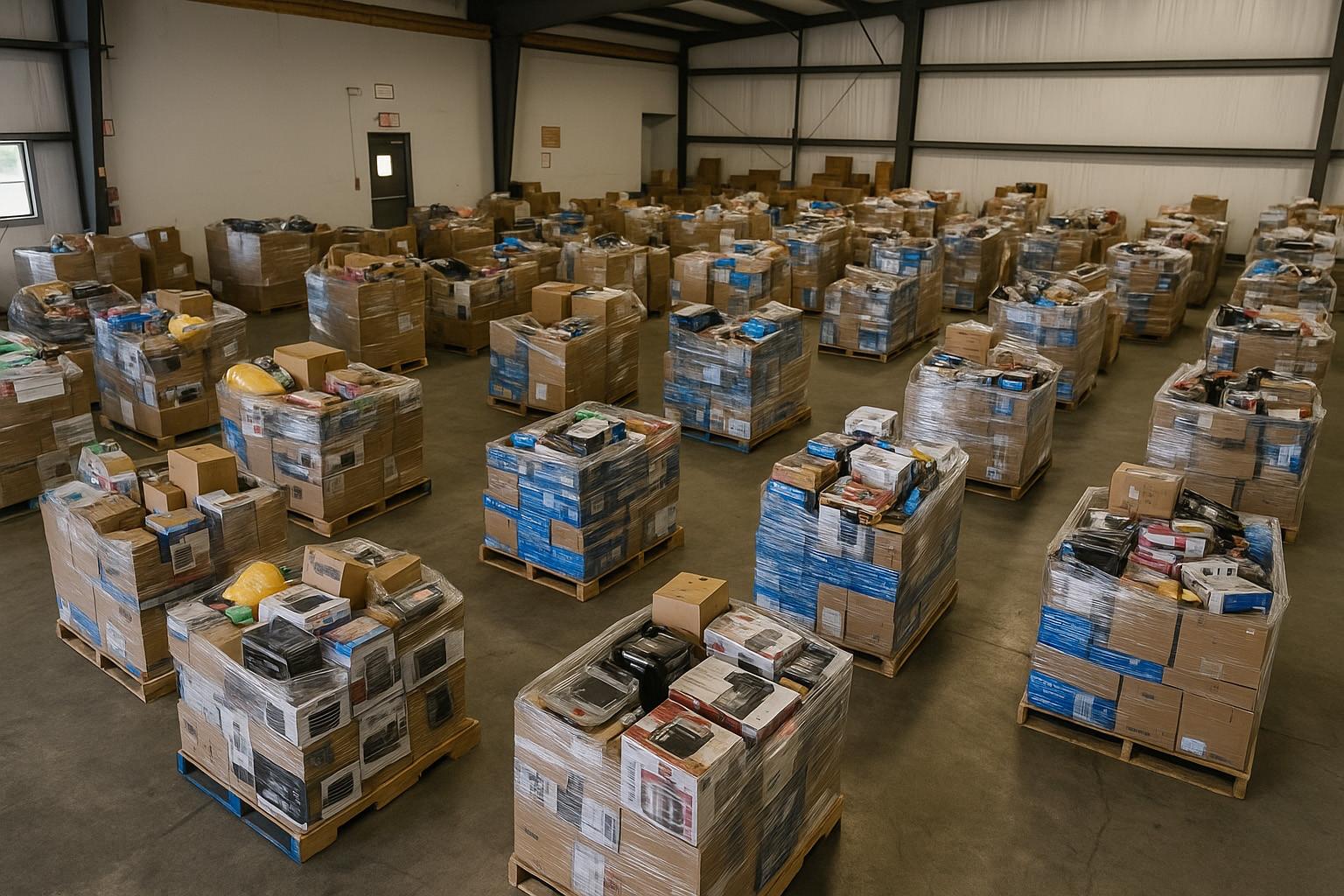
What Are the Biggest Risks When Buying Liquidation Pallets?
So you saw a video of someone opening a pallet and pulling out a brand-new espresso machine, three unopened game consoles, and a suspicious amount of glitter — and now you want in. Welcome to the liquidation pallet business, where the highs are high, the lows involve a box of expired hand sanitizer, and the internet forums are full of cautionary tales that read like horror stories with invoices attached.
What are the biggest risks when buying liquidation pallets? In short: bad manifests, unaccountable sellers, hidden damage, shady payment setups, surprise freight bills, restricted or unsellable items, and — the silent killer of every reseller’s dream — buying blind from a marketplace that treats you like a number instead of a customer. The good news is that every single one of these risks is avoidable once you know what to look for.
This guide breaks down every major risk in painful, occasionally funny detail, then hands you the exact checklist smart resellers use before they ever click “buy now.” We’ll also point you toward pallet categories that tend to be lower-risk and higher-reward, so you’re not just informed — you’re ready to actually order.
Table of Contents
- Why “Cheap Pallets” Can Quietly Become Expensive Regret
- The Full Breakdown: Biggest Risks When Buying Liquidation Pallets
- How to Avoid These Risks (Without Becoming Paranoid)
- Lower-Risk Pallet Categories to Start With
- Frequently Asked Questions
- Conclusion
Why “Cheap Pallets” Can Quietly Become Expensive Regret
Liquidation pallets are bundles of customer returns, overstock, and closeout merchandise sold in bulk, usually at a steep discount off retail value. That discount is exactly what makes the whole thing tempting — and exactly what makes people careless. A pallet listed at “70% off retail” sounds like a steal until you realize the retail value was calculated using the manufacturer’s dreamiest possible MSRP and half the boxes are empty because someone already “tested” the contents at home.
None of this means liquidation pallets are a scam. Thousands of resellers build real income flipping pallets every month. But the industry runs on trust, manifests, and reputation — three things that vary wildly depending on who you buy from. Auction-style marketplaces, anonymous third-party sellers, and platforms with no real customer support tend to be where most horror stories originate. A wholesale liquidation pallets marketplace that actually answers the phone, ships fast, and stands behind its inventory is a very different experience.
Let’s get into the risks — the real ones, not the “what if the box gets a little dusty” ones.
The Full Breakdown: Biggest Risks When Buying Liquidation Pallets
Risk #1: The Mystery Manifest (Or the Complete Absence of One)
A manifest is the itemized list of what’s supposedly inside your pallet. Sounds simple. It isn’t always.
- Vague manifests that list “assorted electronics” instead of actual SKUs, so you have zero idea what you’re really getting.
- Inflated manifests where the listed retail value is wildly higher than what the items would ever sell for.
- No manifest at all, which is basically buying a Kinder Egg the size of a refrigerator — thrilling, but financially reckless.
If a seller can’t or won’t show you a manifest before you commit real money, treat that as a giant, flashing warning sign. Reputable sellers list categories clearly and describe condition honestly, the same way you’d expect from something like a straightforward Wholesale Kitchen Appliances Pallet listing that tells you exactly what category you’re buying into.
Risk #2: Faceless Auction Sites With Zero Accountability
Bidding wars are fun right up until you realize you just paid retail price for “liquidation” goods because six other people got caught up in the same auction adrenaline. Auction-based platforms can be great, but they come with structural risks:
- Bidding fever driving prices above what the pallet is actually worth.
- Buyer’s remorse with no recourse — once you win, you own it, condition surprises and all.
- Anonymous sellers hiding behind auction listings with no direct line of contact if something goes wrong.
A fixed-price or “buy now / make an offer” model, where you know the cost upfront and can actually talk to a human, removes most of this risk entirely.
Risk #3: Hidden Damage and Brutal “Salvage” Grade Shocks
Pallets are graded — new, refurbished, customer returns, salvage, and so on — but grading isn’t standardized across the industry the way, say, gasoline octane ratings are. One seller’s “shelf pulls” is another seller’s “please open this outside.”
- Items that look fine in the listing photo but arrive cracked, missing parts, or water-damaged.
- Grading terms used loosely to make salvage-condition goods sound retail-ready.
- No photos of the actual pallet you’re buying — just generic “stock” images.
This is where buying from a marketplace with real photography and honest condition notes matters. Look at listings like the Liquidation Power Tool Pallets page as an example of what transparent grading should look like — you want to see actual condition language, not marketing fluff.
Risk #4: Sketchy Sellers, Shell Companies, and Ghost Support
This is the risk that turns a bad purchase into a genuinely stressful week. You order a pallet, something’s wrong, and then… silence. No phone number that works. No email replies. A “contact us” form that seems to lead directly into the void.
Warning signs include:
- No verifiable business address or phone number.
- Reviews that all sound suspiciously identical (or don’t exist at all).
- Payment requests routed through personal accounts instead of a proper checkout.
Before buying anywhere, test their Contact page or support line with a real question. If nobody answers before you’ve paid, don’t expect anyone to answer after.
Risk #5: Shipping, Freight, and Customs Surprises
Pallets are heavy. Freight shipping is its own little economy of surprise fees, and plenty of buyers discover — after checkout — that “shipping calculated separately” meant “shipping costs almost as much as the pallet.”
- Unclear freight class leading to inflated last-minute shipping quotes.
- No mention of whether local pickup, national freight, or international shipping is even available.
- Customs delays or duties on international orders that nobody warned you about.
Check the Shipping Information details before ordering, and confirm whether the seller offers fast domestic delivery and international shipping upfront — not as a surprise line item.
Risk #6: Overpaying Because You Panic-Bid
Related to the auction problem but worth its own mention: liquidation pallets create urgency (“only 2 left!” “auction ends in 4 minutes!”) that pushes buyers to overpay out of FOMO rather than math. The fix is boring but effective — know your numbers before you shop, not while you’re mid-checkout with your heart racing.
Risk #7: Non-Resellable, Recalled, or Restricted Items
Occasionally a pallet includes items that are recalled, counterfeit, expired, or restricted for resale in your state or country (certain cosmetics, electronics, or food-adjacent items, for example). Reselling these — even unknowingly — can create real legal and marketplace-compliance headaches. Reputable sellers filter this out long before the pallet gets packed; sketchy ones don’t bother checking.
Risk #8: No Real Return or Refund Policy
If the arrangement is “all sales final, no exceptions, no matter what,” you are accepting 100% of the risk and the seller is accepting 0%. That’s not automatically a scam — liquidation is inherently as-is in many cases — but you should at least know the terms before you pay, not after you’re arguing about a damaged shipment. Always read the Refund & Return Policy in full before checkout.
Risk #9: Payment Scams and Fake Listings
Too-good-to-be-true pricing, requests for untraceable payment methods, and listings copied from other sites are classic red flags. Legitimate sellers offer secure, traceable payment options — and are upfront about them, including options like the Bitcoin Payment page or standard Payment methods, including bank wire for bulk orders. If a “deal” only accepts a payment method that offers you zero recourse, that’s the deal telling you something.
Risk #10: Not Understanding Your Own Resale Market
This one’s on the buyer, not the seller — but it’s still one of the biggest risks in the whole business. Buying a pallet of a product category you don’t understand (or can’t sell in your area) is how garages fill up with unsold Bluetooth speakers. Before you buy, know roughly what similar items resell for, how fast they move, and where you’ll actually list them.
How to Avoid These Risks (Without Becoming Paranoid)
You don’t need a private investigator’s badge to buy pallets safely. You need a short checklist and the discipline to actually use it.
1. Buy From a Marketplace, Not a Mystery Box
Choose sellers with a real storefront, listed contact information, and a track record — not an anonymous auction handle. A proper Shop page with clear categories, prices, and photos is night-and-day different from a listing with a blurry stock photo and a “trust me.”
2. Read the Manifest Like a Contract
Check item counts, condition grading, and estimated retail value line by line. If it’s vague, ask questions before you pay — not after.
3. Start Small Before You Go Big
Your first order shouldn’t be a full truckload. Test a single pallet, evaluate the condition and resale speed, then scale up once you trust the source.
4. Confirm Support Actually Exists
Message support with a real question before buying. A seller who responds quickly before the sale is far more likely to help you after it.
5. Understand the Full Landed Cost
Add pallet price + shipping + any fees before comparing deals. A “cheaper” pallet with brutal freight costs isn’t actually cheaper.
6. Know the Return Policy Cold
Read it in full, ideally before you’re emotionally invested in a specific pallet. If it’s unclear, that ambiguity is itself the risk.
7. Check How the Company Talks About Itself
A seller with a real About Us page and a documented How To Order process is signaling that they expect to still be around next quarter — which is exactly the kind of company you want holding your money.
Lower-Risk Pallet Categories to Start With
If you’re newer to flipping, categories with predictable demand, easy authentication, and strong resale communities tend to carry less risk than ultra-niche or highly technical goods. A few worth exploring:
- Labubu Mystery Figure Pallets — collectible-driven demand with an active resale community.
- Funko Pop Pallets — easy to identify, easy to photograph, easy to sell.
- Hot Wheels Pallet For Sale — low unit cost, broad buyer base.
- Premium LEGO Pallet Wholesale — strong resale value if sets are sealed.
- Pokémon Card Pallets and Wholesale Magic The Gathering Cards Pallet — sealed product is easy to verify.
- Sports Card Pallet Wholesale — consistent collector demand.
- Stanley Cups Pallet — high resale velocity while the trend is hot.
- EarPods Pallets Wholesale — small, shippable, widely wanted.
- Mixed Electronics Pallet Wholesale — higher ticket, so vet the manifest closely.
- Wholesale Mixed Toy Pallets — reliable seasonal demand.
- Makeup and Beauty Pallets Wholesale — check expiration dates and sealing.
- Cheap Wholesale Video Game Pallets — strong niche resale communities.
- Wholesale Hunting & Fishing Gear Pallets — durable goods, low spoilage risk.
- Liquidation Power Tool Pallets — high resale value, but confirm testing/grading.
- Wholesale Kitchen Appliances Pallet — great everyday resale category.
- Bulk Supply of Wholesale Cleaning Detergent Pallets — consistent household demand.
- General Merchandise Pallets Wholesale — good for variety-store style resale.
- Bulk Accessories Pallets For Sale — flexible, low-cost entry point.
- Sports Card Pallets Wholesale – Sealed Trading Cards — another strong sealed-collectible option.
Whichever category fits your resale plan, the underlying advice is the same: check the manifest, check the seller, and check your own math before you check out.
Frequently Asked Questions
What are the biggest risks when buying liquidation pallets?
The biggest risks are vague or missing manifests, hidden damage or heavy salvage-grade goods, unresponsive or anonymous sellers, surprise freight costs, restricted or recalled items, unclear return policies, and overpaying due to auction pressure. Buying from a transparent, contactable seller with clear manifests and photos removes most of these risks upfront.
Are liquidation pallets worth the risk?
For most resellers, yes — as long as you buy smart. Liquidation pallets can offer strong margins because you’re paying a fraction of retail value, but the profit only shows up if you avoid the common traps: bad manifests, unreliable sellers, and unrealistic resale expectations for the category you chose.
How do I know if a liquidation pallet seller is legit?
Look for a real business address, a working phone number, an active support channel, clear payment options, a documented return policy, and reviews that sound like actual humans wrote them. Test their customer support with a question before you order — it tells you everything about what happens if something goes wrong later.
What condition are liquidation pallet items usually in?
It varies by grading: new/overstock pallets are typically unused, while customer-return or salvage pallets can range from “works perfectly” to “needs repair.” Always confirm the grading terminology with the seller before buying, since standards aren’t universal across the industry.
Is it better to buy liquidation pallets by auction or at a fixed price?
Fixed-price or “buy now / make an offer” purchases give you cost certainty and remove the risk of overpaying in a bidding war. Auctions can occasionally produce a lower price, but they also come with unpredictable final costs and, on some platforms, less seller accountability.
How much should I budget for shipping on a liquidation pallet?
Freight costs depend on weight, distance, and whether you choose local pickup or delivery. Always get a clear shipping quote — or confirm published shipping terms — before you commit to a purchase so the “discount” price doesn’t quietly disappear at checkout.
Can I return a liquidation pallet if it’s not what I expected?
That depends entirely on the seller’s policy, which is why reading it before you buy matters so much. Many liquidation sales are as-is, so understanding exactly what recourse (if any) you have is a critical step, not an afterthought.
Conclusion
Buying liquidation pallets isn’t a gamble if you treat it like a business instead of a scratch ticket. Every risk on this list — mystery manifests, ghost sellers, freight surprises, damaged goods, restricted items, murky refund policies, and plain old overpaying — has a straightforward fix: buy from a seller who’s transparent about what’s in the box, easy to reach when something goes sideways, and upfront about pricing, shipping, and returns before you ever click “add to cart.”
Start small, read everything, ask questions early, and pick a category you actually understand. Do that, and the “biggest risks” in liquidation pallet buying stop being scary stories from a forum and start being a checklist you’ve already knocked out. Your future self — unpacking a pallet full of things people actually want to buy — will thank you.