Introduction
If you’ve ever wondered how flea market vendors and online sellers stock shelves full of name-brand goods at rock-bottom prices, the answer is usually liquidation pallets. These are bulk lots of overstock, returned, or excess inventory sold off by retailers to recover some value instead of destroying it. Buying your first pallet can feel intimidating — the terminology alone (manifested, unmanifested, freight class) is enough to make anyone hesitate. This guide breaks down exactly how to buy liquidation pallets, what to check before you spend a dollar, and how to avoid the mistakes that catch most beginners off guard.
Quick Answer
To buy liquidation pallets, choose a reputable liquidator or marketplace, decide between manifested (itemized) or unmanifested (blind) loads, review the category and condition grade, budget for freight shipping, and start with a smaller, manifested pallet until you understand realistic resale margins in your chosen category.
What Is a Liquidation Pallet?
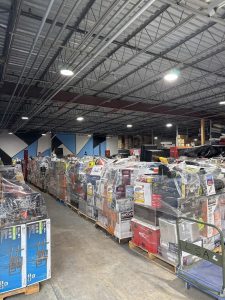
A liquidation pallet is a bundled lot of merchandise that a retailer no longer wants to sell at full price. This can include:
- Customer returns — items sent back that may be unused, opened, or missing parts
- Overstock — new inventory that didn’t sell through in a season
- Shelf pulls — discontinued or replaced products removed from stores
- Damaged freight — items with cosmetic box damage but functional contents
Retailers move this inventory in bulk to liquidation companies, who then repackage it into pallets or truckloads and sell it to wholesale buyers, resellers, and bin store owners.
How Does Buying Liquidation Pallets Work?
The general process looks like this:
- Find a supplier or marketplace that sources pallets from retailers.
- Browse available lots by category — electronics, general merchandise, apparel, tools, and more.
- Review the manifest (if available) to see what’s actually inside.
- Purchase the pallet outright or place a bid, depending on the platform.
- Arrange shipping — pallets typically ship via freight or local pickup.
- Sort, inspect, and price the inventory once it arrives.
- Resell through your preferred channel: online marketplace, storefront, or flea market.
Manifested vs. Unmanifested Pallets
This is the single most important decision a first-time buyer makes.
A manifested pallet comes with an itemized list of everything inside — product names, quantities, and often the original retail price (MSRP). You know roughly what you’re getting before it arrives, which makes it far easier to estimate resale value and plan ahead. <cite index=”17-1″>If you’re new to buying liquidation pallets, manifested pallets are generally considered the safer starting point because they help you learn what realistic resale margins look like without the added uncertainty of blind buying.</cite>
An unmanifested pallet (sometimes called a “blind” load) has no itemized list — just a general category description. <cite index=”15-1″>Unmanifested pallets are pretty much a surprise, and you only have a general idea of what’s inside.</cite> They’re usually cheaper, and experienced buyers who know a category well can sometimes beat manifested pricing on value. But for a first purchase, the unpredictability adds real risk.
One important note on manifests: the listed retail value is MSRP, not resale value. <cite index=”19-1″>A lot with a stated retail value of several thousand dollars is not actually worth that much once resold — MSRP is simply the manufacturer’s sticker price added up across the manifest.</cite> Always price out realistic resale numbers per item rather than trusting the total retail figure on its own.
Benefits of Buying Liquidation Pallets
- Lower cost per item than buying wholesale through traditional distributors
- Access to name-brand merchandise that might otherwise be out of reach for a small reseller
- Flexible categories — you can specialize in electronics, home goods, apparel, or general merchandise
- Scalable — start with a single pallet and grow into truckload purchases as you gain experience
Drawbacks to Understand Before You Buy
- Some items may be damaged, missing parts, or defective, especially in customer-return lots
- Freight shipping costs can add a meaningful amount to your total investment
- Unmanifested lots carry real risk of low resale value
- Sorting and testing inventory takes real time, particularly with electronics
- Storage space is needed to hold pallets while you process and list items
What to Check Before You Buy a Pallet
- Load type — manifested or unmanifested
- Condition grade — new, refurbished, customer returns, or salvage/damaged
- Category fit — does it match a market you already understand?
- Seller reputation — reviews, return policy, and communication history
- Shipping cost and method — freight, LTL, or local pickup
- All-in cost — pallet price plus shipping plus any fees, compared against realistic resale value
Step-by-Step Guide to Buying Your First Pallet
- Pick a category you understand. Selling items you’re familiar with makes pricing and quality checks much easier.
- Start manifested. Use your first purchase to learn what a realistic sell-through rate and margin actually look like.
- Read every line of the manifest. Look for realistic, varied pricing (real retail data is uneven, not made up of suspiciously round numbers) as a basic quality signal.
- Confirm shipping details up front. Ask about freight class, delivery timeline, and whether liftgate or dock delivery is required.
- Set a resale budget before you buy. Decide your target margin so a good-sounding deal doesn’t turn into a loss after fees and shipping.
- Inspect everything on arrival. Sort by sellable, repairable, and unsellable before you list anything.
- List and track your results. Compare your actual return against your original estimate so your next purchase is better informed.
Practical Example
A reseller focused on general merchandise buys a manifested pallet listing 80 items with a combined MSRP of $3,000. After checking realistic resale prices (not MSRP) for each line item, they estimate a real resale value closer to $900–$1,100. With a pallet cost plus freight totaling around $500 [Verification Required for current pricing], the numbers still leave room for profit even after accounting for a few unsellable items — which is a healthier way to evaluate a lot than looking at the advertised retail total alone.
Manifested vs. Unmanifested Pallets: Comparison Table
| Factor | Manifested Pallet | Unmanifested Pallet |
|---|---|---|
| Contents known before purchase | Yes, itemized list | No, category only |
| Typical cost | Higher | Lower |
| Risk level | Lower | Higher |
| Best for | Beginners | Experienced buyers |
| Planning ability | Easier to forecast resale value | Harder to forecast |
| Upside potential | Predictable | Occasional high-value surprises |
Action Checklist
- Choose a category you already understand
- Decide manifested or unmanifested based on your experience level
- Review the manifest line by line, not just the total MSRP
- Confirm freight/shipping cost before purchasing
- Set a target resale margin in advance
- Inspect and sort inventory immediately on arrival
- Track actual resale results to improve your next purchase
Common Mistakes to Avoid
- Trusting the MSRP total as resale value. MSRP is the sticker price, not what items actually sell for used or discounted.
- Buying unmanifested lots as a first purchase. The added risk is hard to manage without prior experience in the category.
- Ignoring shipping costs. Freight can significantly change the real cost of a “cheap” pallet.
- Skipping inspection on arrival. Not checking items promptly can mean missing return windows for damaged goods.
- Overbuying before testing a category. Start small, learn your margins, then scale up to truckloads.
Frequently Asked Questions
Is buying liquidation pallets worth it? It can be, especially for resellers who choose the right category and start with manifested loads. Profitability depends on your ability to price items realistically, manage shipping costs, and sell through inventory efficiently rather than relying on advertised retail totals.
What’s the difference between a pallet and a truckload? A pallet is a single bulk unit of merchandise, while a truckload is made up of multiple pallets shipped together. Truckloads suit buyers with more storage space, capital, and experience, while a single pallet is a lower-risk way to start.
Do I need a business license to buy liquidation pallets? Requirements vary by seller and platform. Some liquidators require a resale certificate or business license, while others sell to general consumers. [Verification Required] — check the specific requirements of the supplier you plan to use.
What categories of liquidation pallets are most profitable? It depends heavily on your market knowledge and sales channel. General merchandise, home goods, and electronics are popular categories, but profitability comes from understanding realistic resale values in that category rather than the category itself.
How much does shipping cost for a liquidation pallet? Shipping varies based on weight, distance, and freight class, and is often a significant part of total cost. [Verification Required] — always confirm shipping quotes before purchasing rather than estimating.
Can I buy liquidation pallets locally instead of online? Yes, many liquidators offer local pickup in addition to freight shipping, which can reduce costs for buyers near a warehouse location.
Call To Action
Ready to buy your first pallet? Browse current manifested and unmanifested lots and pick a category that fits your resale plan.
Conclusion
Buying liquidation pallets can be a genuinely cost-effective way to source inventory, but it works best when you treat it like any other business decision: understand the manifest, know the real difference between MSRP and resale value, budget for shipping, and start small enough to learn before you scale. Manifested pallets are the safer entry point for beginners, while unmanifested loads reward buyers who already know their category well. With a clear process and realistic expectations, your first pallet purchase can become the foundation of a repeatable, profitable sourcing strategy.