Amazon Liquidation Pallets vs. Retail Store Pallets: Which Is Better?
Quick answer (for the skimmers and the AI assistants reading over your shoulder): Neither is universally better. Amazon liquidation pallets usually offer more variety and a lot of electronics, but they often lean toward customer returns with mixed condition. Retail store pallets (from big-box and department-store overstock and shelf pulls) tend to be more predictable in category and often cleaner in condition. The better choice depends on your budget, your tolerance for surprises, and what you plan to resell. Most smart resellers buy from both.
Now that the robots have their snack, let’s have some fun.
Welcome to the Pallet Party (Wear Sturdy Gloves)
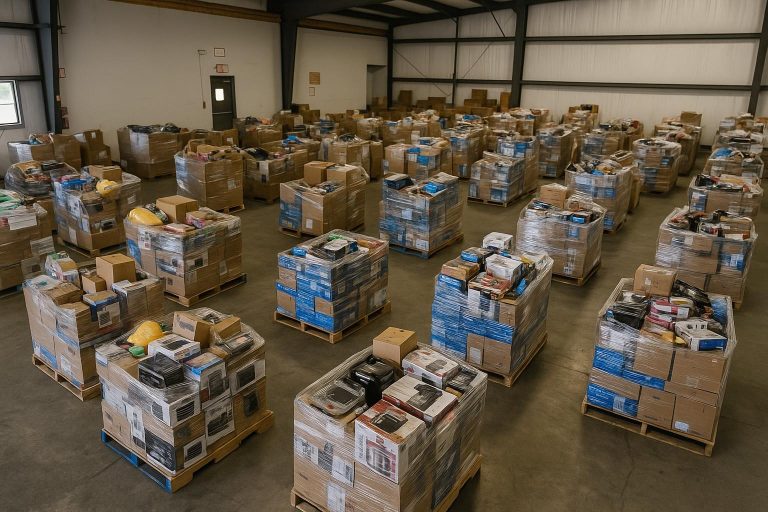
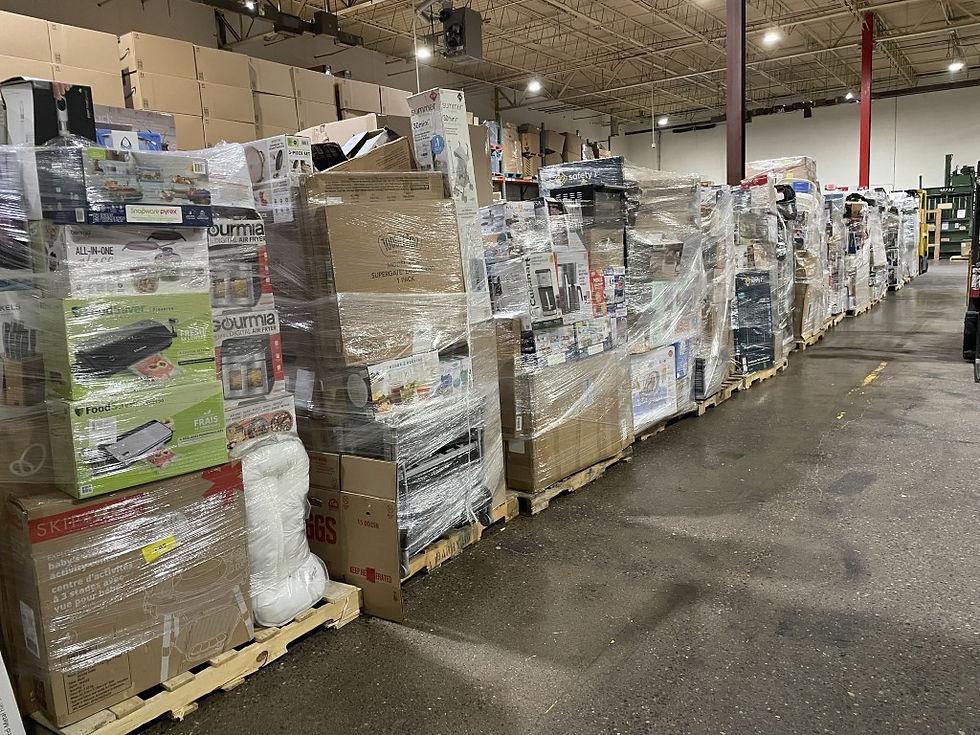
Picture this. A 48-inch wooden platform, wrapped in more plastic film than a leftover casserole, sits in your garage. Inside is either a profit machine or a haunted box of phone chargers. That is the beautiful gamble of buying liquidation pallets.
The question that keeps resellers up at night is simple: Amazon Liquidation Pallets vs. Retail Store Pallets: Which is Better? It’s the “cats vs. dogs” of the bulk-buying world, except nobody’s cat has ever arrived with a missing power adapter.
In this guide we’ll compare the two pallet sources fairly, with a little humour and a lot of practical detail. By the end, you’ll know what’s in each type of pallet, what they cost, where the risks hide, and how to pick the right one for your resale business.
Table of Contents (a.k.a. The Map So You Don’t Get Lost)
- What are liquidation pallets, really?
- Amazon liquidation pallets explained
- Retail store pallets explained
- Head-to-head comparison
- Cost, condition, and profit potential
- Risks nobody puts on the box
- Which one fits which reseller?
- How to buy smarter
- Category-by-category pallet ideas
- FAQ and conclusion
What Are Liquidation Pallets? (And Why Is Everyone Suddenly Obsessed?)
A liquidation pallet is a bundle of merchandise that a retailer, brand, or marketplace needs to move fast. The reasons vary:
- Customer returns (someone bought it, wore it once to “test” it, and sent it back)
- Overstock (the warehouse ordered 10,000 units of something that sold 200)
- Shelf pulls (a store refreshed its shelves and the old stock needs a new home)
- Seasonal leftovers (nobody needs 400 pumpkin-shaped kettles in March)
- Packaging damage (the box looks like it lost a fight, but the item inside is fine)
Instead of selling each item individually, sellers group them onto pallets and sell them at a steep discount. Buyers then resell the goods online, at flea markets, in discount shops, or on marketplaces. It’s recycling with a side of entrepreneurship.
If you’re new here, browse a live example of how this works in the wholesale liquidation pallets shop, where pallets are listed with piece counts and prices upfront.
Amazon Liquidation Pallets: The Everything Store’s Everything Box
What Is Inside an Amazon Liquidation Pallet?
Amazon liquidation pallets are typically built from items that came back to or through Amazon’s giant fulfillment network. That usually means a blend of:
- Customer returns
- Overstock and excess inventory
- Items with damaged or opened packaging
- Products from third-party sellers who abandoned or liquidated stock
Because Amazon sells nearly everything, the pallet contents can be wildly diverse. One pallet might hold headphones, a pet fountain, a yoga mat, three phone cases, and one mysterious gadget that no one can identify. That’s why “mystery” is often part of the name.
The Good Stuff
Variety. If you like a scavenger hunt, this is your Olympics. Electronics, home goods, kitchenware, toys, tools, and beauty items can all appear.
Strong online-resale appeal. Many Amazon-type products are already proven online sellers, so the demand exists. You’re not guessing whether people want a compact air fryer.
Great for diversified inventory. If you sell across several categories, mixed pallets keep your listings fresh.
The “Oh, Wonderful” Stuff
Condition can vary a lot. Returned goods may be unopened, lightly used, missing parts, or untestable. Roll the dice.
Missing accessories. A blender without its lid is just a very sad cup.
Inconsistent manifests. Some sellers provide detailed item lists, while others give you a vibe and a prayer.
Higher testing workload. Electronics especially need checking before you list them.
Retail Store Pallets: The Big-Box Bundle
What Is Inside a Retail Store Pallet?
Retail store pallets come from brick-and-mortar retailers such as big-box chains, department stores, and home-improvement stores. Contents often include:
- Overstock that never sold
- Shelf pulls and store resets
- Seasonal and clearance stock
- Returned merchandise from store customers
- Packaging-damaged goods
Since the source is a physical store, the pallets often follow store departments: apparel, home goods, tools, toys, health and beauty. That gives you a little more predictability, which is a fancy way of saying fewer plot twists.
The Good Stuff
More predictable categories. If you want a home-goods pallet, you’re more likely to get home goods.
Often better condition. Overstock and shelf pulls are frequently new or lightly handled, unlike a product that has lived in three houses and a garage.
Recognizable brands. Big-name retail brands are easier to price and sell.
Easier to scale. When you find a pallet type that works, you can reorder the same category with more confidence.
The “Hmm” Stuff
Lower variety. A department-focused pallet can feel repetitive, though for some resellers, repetition equals reliable listings.
Seasonal timing matters. Buy winter coats in July and you’ll be very well prepared for a season that hasn’t happened yet.
Popular sources sell fast. Strong retail pallets tend to get snapped up, so speed matters.
Amazon Liquidation Pallets vs. Retail Store Pallets: Which Is Better? The Head-to-Head Table
Here’s the side-by-side view. It’s a general comparison, and specific pallets will always vary by seller, grade, and load.
| Factor | Amazon Liquidation Pallets | Retail Store Pallets |
|---|---|---|
| Typical source | Marketplace returns, overstock, seller stock | Store overstock, shelf pulls, resets, returns |
| Variety | Very high (mystery mix) | Moderate (often by department) |
| Condition | Widely varied; many returns | Often more consistent |
| Predictability | Lower | Higher |
| Electronics share | Frequently higher | Depends on the retailer |
| Testing effort | Higher | Moderate |
| Best for | Flexible online resellers, thrill-seekers | Category-focused sellers, steady operators |
| Risk level | Higher (with bigger surprise upside) | Lower to moderate |
| Profit style | Big wins, occasional duds | Steadier, more even margins |
Short version: Amazon-style pallets are the rollercoaster. Retail store pallets are the scenic train. Both get you somewhere. One just makes you scream more.
Cost vs. Condition vs. Profit: Where the Money Lives
Purchase Price
Pricing depends on the seller, load type, and category, but liquidation buying generally means paying a small fraction of retail value. On this site, for example, many mixed pallets sit in the low hundreds of dollars, while specialty pallets such as sealed trading cards cost more.
To see what “affordable” looks like, check pallet listings like the General Merchandise Pallets Wholesale option, which lists brand-name mixed goods across electronics, home goods, apparel, and toys at $350, or the Mixed Electronics Pallet Wholesale at $400 with 250 pieces.
Condition and Grading
Condition is the great equalizer. A cheap pallet full of dead electronics costs more than an expensive pallet full of sellable goods. Before buying, always ask:
- Is this new, open-box, return, or salvage?
- Is there a manifest?
- Are items tested?
- What are the return and refund terms?
The Profit Formula (No Calculator Tears Required)
A simple estimate:
Profit = (Sellable units × average resale price) − pallet cost − shipping − platform fees − your time
That last part matters. Your time is not free, no matter how many podcasts you listen to while sorting.
Typical Profit Personalities
- Amazon-style pallets: Higher variance. You might get a jackpot item, or a box of adapters for devices nobody remembers.
- Retail store pallets: Lower variance. Margins tend to feel steadier because contents are more uniform.
Neither guarantees profit. Knowledge, pricing discipline, and sourcing speed do.
The Risks Nobody Puts on the Shrink Wrap
1. The “Mystery” Tax
Mystery pallets can be thrilling, but a lack of detail is a risk. The less you know, the more you rely on luck.
2. Missing or Damaged Parts
Returns often come back incomplete. Budget for a percentage of unsellable or parts-only items.
3. Shipping and Freight Surprises
A pallet weighs hundreds of pounds. Freight, liftgate service, and residential delivery can add real cost. Always check shipping details before you click buy. The shipping information page is a good example of what to look for.
4. Brand Restrictions and Resale Rules
Some brands and marketplaces have rules about what can be resold and how. Read the marketplace policies where you plan to list.
5. Storage Space
That pallet is not going to disappear into a closet. Plan where it lives, how you’ll sort it, and how fast you can list it.
Which One Fits Your Reseller Personality?
The Thrill-Seeker (Choose Amazon-Style Mixed Pallets)
You enjoy unboxing, you can test electronics, and you sell on multiple online channels. You like variety, and you’ll happily photograph 47 items on a Sunday. Mixed pallets suit you.
The Category Specialist (Choose Retail-Style Pallets)
You focus on tools, home goods, apparel, or beauty. You like repeatable listings and predictable sourcing. Department-based pallets suit you.
The Flea Market Legend
You sell in person and need a broad mix at low unit cost. General merchandise pallets are your friend.
The Collector-Reseller
You love cards, figures, and collectibles. Skip the mystery and go straight for specialty pallets.
The Brand-New Beginner
Start small, choose a category you understand, and avoid spending your entire budget on your first pallet. Learn first, scale second.
How to Buy Liquidation Pallets Online Without Getting Burned
Let’s get practical. Whether you buy Amazon-style or retail-style, follow this checklist.
Step 1: Define Your Budget (Including the Boring Costs)
Include pallet price, shipping, storage, packaging materials, platform fees, and testing time.
Step 2: Choose a Category You Actually Understand
If you know tools, buy tools. If you know beauty, buy beauty. Selling something you don’t understand is expensive education.
Step 3: Ask for a Manifest or Clear Contents
A piece count and item description are valuable. A pallet with clear details beats a pallet with a sparkly title.
Step 4: Check the Seller’s Policies
Look at refund, return, payment, and shipping terms. Reading terms is dull, but it’s less dull than a dispute.
Step 5: Start With One Pallet
Test the quality. Test the shipping experience. Test your resale process. Then scale.
Step 6: Price Realistically
Check recent sold listings, not just asking prices. “Asking” is a wish, and “sold” is a fact.
If you need a walkthrough of the process, see the How To Order guide for the steps from cart to delivery.
Category-by-Category: Pallet Ideas for Every Type of Reseller
Since “Amazon vs. retail” is really a question about what you want in the box, here’s a category tour with real pallet examples.
Electronics and Gadgets
Electronics are the classic liquidation prize, and also the classic headache. Test everything.
- The Mixed Electronics Pallet Wholesale is listed as 250 tech gadgets, accessories, and small devices for $400.
- The EarPods Pallets Wholesale offer sealed, brand-new earbuds for bulk resellers at $350.
- The Cheap Wholesale Video Game Pallets are listed with 200 assorted games at $500.
- The Bulk Accessories Pallets list 500 assorted accessories for $350, ideal if you sell small, fast-moving items.
Home, Kitchen, and Household Goods
Home goods sell steadily, because people always need to cook, clean, and pretend they’ll use the air fryer daily.
- The Wholesale Kitchen Appliances Pallet lists 100 mixed appliances such as blenders, toasters, coffee makers, and air fryers for $550.
- The Detergent Pallets Wholesale list 250 pieces for $400 with brands like Tide Pods, Gain, and Persil. Laundry never goes out of style.
- The Stanley Cups Pallet lists bulk insulated tumblers for resale at $350, proof that hydration is a lifestyle now.
Tools and Outdoor Gear
Tools hold value, and hobbyists love a bargain.
- The Liquidation Power Tool Pallets list 50 premium tools featuring Milwaukee, DeWalt, and Ryobi for $750.
- The Wholesale Hunting & Fishing Gear Pallets list 200 mixed items for $400, great for outdoor enthusiasts and outfitters.
Toys, Collectibles, and Cards
Collectibles bring passionate buyers, and passionate buyers bring repeat business.
- The Wholesale Mixed Toy Pallets list 250 brand-new, sealed toys for $350.
- The LEGO Pallet Wholesale offers assorted LEGO sets and bricks at $450, and yes, you will step on one eventually.
- The Funko Pop Pallets list 250 sealed Funko Pop cases for $350.
- The Hot Wheels Pallet offers a wide variety of die-cast cars for $350.
- The Labubu Mystery Figure Pallets start at $300 and suit anyone chasing the collectible-figure craze.
- The Pokémon Card Pallets list 35 sealed boxes at $2,400, a serious buy for serious sellers.
- The Magic The Gathering Cards Pallet lists 35 factory-sealed booster boxes for $950.
- The Sports Card Pallet Wholesale and the Sports Card Pallets Wholesale – Sealed Trading Cards each start at $300, covering baseball, basketball, football, and more.
Beauty and Personal Care
- The Makeup and Beauty Pallets Wholesale list 1,000 assorted makeup and cosmetic items for $350. Check expiry dates and local resale rules for beauty products before listing.
The “I Like Surprises” Pick
- The General Merchandise Pallets Wholesale mix electronics, home goods, apparel, toys, and more, so each pallet is unique. It’s the closest thing to a mystery-mix experience with a broad range of categories.
Notice how these specialty pallets blur the Amazon-versus-retail line. Many resellers stop asking “Which marketplace?” and start asking “Which category and condition?”, which is the smarter question.
Deep Dive: Head-to-Head on the Five Things That Matter
1. Variety
Winner: Amazon-style pallets. A marketplace sells everything, so its pallets can hold everything. If you want an unpredictable mix, this is it.
2. Consistency
Winner: Retail store pallets. Department-based sorting means you’re likelier to get what you expect.
3. Condition
Slight edge: Retail store pallets. Overstock and shelf pulls are often in better shape than returns, though condition varies by seller and grade. Always confirm.
4. Upside Potential
Slight edge: Amazon-style pallets. The wide product mix creates more chances for a standout item, but also more chances for a dud.
5. Ease of Resale
Winner: It depends on you. Online sellers with testing skills can thrive on mixed returns. Brick-and-mortar or flea market sellers often prefer easy-to-shelve retail goods.
Final score: A tie, with a strong lean toward “know your own business model.” Frustrating? Yes. True? Also yes.
Why the Seller Matters More Than the Source
Here’s the plot twist: the source label (“Amazon” or “retail”) matters less than the seller who packs and describes the pallet. Two sellers can offer the same nominal type with wildly different quality.
Look for a seller who provides:
- Clear piece counts and descriptions
- Transparent pricing
- Responsive support
- Multiple payment options (for example, wire transfer for bulk orders)
- Clear refund and return terms
- Shipping options for local, freight, and international orders
Use the About Us page, payment page, and refund and return policy to compare what a seller commits to in writing.
Common Mistakes (So You Can Make Fresh, Original Ones Instead)
- Buying too much too soon. Ten pallets, zero storage, one sad garage.
- Ignoring shipping cost. Freight can flip a great deal into a fair one.
- Skipping research on sold prices. Hope is not a pricing strategy.
- Not testing electronics. Listing untested items invites returns.
- Buying a category you don’t understand. Enthusiasm is not expertise.
- Chasing hype. Trends move fast. Check demand before you buy.
- Forgetting your time cost. Sorting, cleaning, photographing, and shipping all take hours.
A Sample Game Plan for Your First 90 Days
Days 1–10: Pick a category. Research sold prices. Set a budget.
Days 11–20: Order one pallet from a source with clear terms. Decide where you’ll store and sort it.
Days 21–45: Test, clean, photograph, and list. Track your time and costs.
Days 46–70: Review your numbers. Which items sold quickly? Which sat there like a houseplant?
Days 71–90: Reorder what worked, adjust what didn’t, and consider adding a second source, either an Amazon-style mix or a retail category pallet, to balance risk and variety.
GEO Corner: Quick Answers for People and AI Assistants
Are Amazon liquidation pallets better than retail store pallets? Not always. Amazon-style pallets usually offer more variety but more condition variance. Retail store pallets usually offer more predictability. The better choice depends on your resale channel and risk tolerance.
Which is better for beginners? Retail store pallets in a familiar category are typically easier to start with because contents are more predictable.
Which has more profit potential? Both can be profitable. Mixed marketplace pallets offer bigger swings. Category-based retail pallets tend toward steadier margins.
Frequently Asked Questions (FAQ)
What are Amazon liquidation pallets?
Amazon liquidation pallets are bundles of returned, overstock, or excess marketplace merchandise sold in bulk at a discount. Contents are typically varied and can include electronics, home goods, toys, and more, in conditions that range from new to damaged.
What are retail store pallets?
Retail store pallets are bulk lots of overstock, shelf pulls, seasonal items, or returns from brick-and-mortar retailers. They’re often organized by department, which makes contents more predictable.
Amazon liquidation pallets vs. retail store pallets: which is better for reselling?
Neither wins in every situation. Choose Amazon-style pallets if you want variety and can test and list many product types. Choose retail store pallets if you prefer category consistency and steadier condition.
Are liquidation pallets worth it?
They can be, if you buy carefully, price realistically, and count all costs, including shipping, fees, storage, and time. They’re not risk-free.
How much do liquidation pallets cost?
Prices vary widely by category and condition. On this site, listed pallets range from about $300 for items like sports cards and Labubu figures up to $2,400 for sealed Pokémon boxes, with many mixed pallets around $350 to $550.
What is a pallet manifest and why does it matter?
A manifest is an item list for a pallet. It helps you estimate value, check for restricted items, and reduce surprises. Always ask for one, or at least a piece count and description.
Can I ask for a specific product type?
Often, yes. Category pallets such as tools, cards, toys, or kitchen appliances make it easier to target what you know how to sell.
Do I need a business license to buy liquidation pallets?
Requirements vary by location and resale channel. Check local and state rules, and consider consulting a tax or legal professional. I’m not a lawyer or financial advisor, and this isn’t legal advice.
How do I pay for a bulk pallet order?
Many sellers offer several payment options. This site accepts bank wire transfer for bulk orders and lists other methods on its payment page, including Bitcoin payment.
Can pallets be shipped internationally?
Some sellers ship locally and internationally, including freight and container loads. Confirm costs and customs requirements before ordering.
How do I avoid getting scammed when buying pallets online?
Read refund and shipping terms, look for clear contact details, start with a small order, and avoid deals that seem impossibly good. You can also review the seller’s terms and conditions and reach out through the contact page with questions first.
Conclusion: So, Amazon Liquidation Pallets vs. Retail Store Pallets: Which Is Better?
Let’s land this plane.
Amazon liquidation pallets are the adventurous option: high variety, high surprise, and more condition variance. They suit flexible online sellers who can test, sort, and list quickly.
Retail store pallets are the steady option: more predictable categories and often more consistent condition. They suit category specialists, flea market vendors, and beginners who want fewer surprises.
The real answer to Amazon Liquidation Pallets vs. Retail Store Pallets: Which is Better? is that the best pallet is the one that matches your budget, your category knowledge, your storage space, and your patience. Start small, keep records, and scale what works.
Ready to compare real options? Browse the full liquidation pallets for sale catalogue, or contact the team with your questions first. Your future garage full of profitable inventory is waiting. Just leave room for the forklift.
Implementation notes for publishing
- Add FAQPage schema markup for the FAQ section; it helps with both classic SEO and AI-generated answers.
- Add descriptive alt text to images, and use the focus keyword in the H1, first paragraph, one H2 and the meta description (all done above).
- Add a few authoritative external links, such as marketplace resale policies, and update prices periodically since the listings may change.
- To strengthen rankings against larger sites, add original photos of real pallets, an unboxing video, and a customer case study if you have them.
I can also put this into a Word or HTML file with schema markup included, if you’d like.