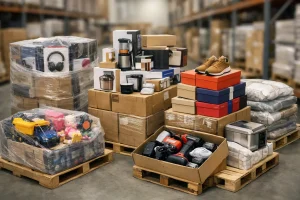
What Is a Liquidation Pallet, Really?
Before we untangle What’s the Difference Between #1 and #2 Liquidation Pallets, let’s cover the basics, because apparently not everyone spent their Saturday night reading about retail liquidation for fun (weird, I know).
A liquidation pallet is a bulk lot of merchandise that a retailer no longer wants on its shelves. Maybe it’s excess inventory a retailer needs to liquidate before year-end, maybe it’s customer returns nobody had time to sort, or maybe it’s just overstock that missed its seasonal window. Retailers don’t want to store it forever (warehouse space costs money), so they sell it off in bulk, at a steep discount, to wholesalers and resellers like you.
Instead of one item, you get a whole pallet: anywhere from a dozen to a few hundred units, stacked, wrapped, and shipped to your door (or picked up locally if you’re the adventurous type). It’s basically retail’s version of a garage sale, except the garage is a distribution center and the sale happens by the truckload.
Why Grading Even Exists
If every pallet were identical, nobody would need a grading system — you’d just buy the cheapest one and call it a day. But merchandise arrives in wildly different conditions. Some of it never left the box. Some of it got returned by a customer who changed their mind three seconds after opening it. Some of it got dropped, dented, or lightly interrogated by a toddler. Grading exists to give buyers a fighting chance at knowing what they’re actually paying for before the box shows up.
The Liquidation Grading System, Explained Like You’re Five (But Smarter)
Here’s the heart of it: liquidation sellers sort merchandise into numbered condition tiers, most commonly #1 (“Grade A”) and #2 (“Grade B”), with lower grades (salvage, “as-is,” or #3) trailing behind for the rougher stuff. Think of it less like a school report card and more like a restaurant menu — the number tells you what tier of experience you’re signing up for.
What Does “#1 Grade” Mean?
A #1 grade pallet is the top shelf of the liquidation world. This is merchandise that’s typically:
- New, unused, and often still sealed in original retail packaging
- Overstock or shelf-pulls (never sold, simply removed to make room for new inventory)
- Free of major cosmetic damage — no dents, no missing parts, no mystery stains
- Higher in resale value per unit because it’s essentially “as good as retail”
This is the grade you buy when you want predictability. You’re paying a premium, but you’re also buying peace of mind — and a much shorter list of things that could go wrong when the truck pulls up.
What Does “#2 Grade” Mean?
A #2 grade pallet is the “adventurous but still respectable” tier. Expect a mix of:
- Customer returns — items that came back to the store for any reason (wrong size, changed mind, or an actual defect)
- Open-box items missing original packaging, tags, or accessories
- Light cosmetic wear — scuffs, dust, a slightly crumpled box that has seen things
- A wider range of functionality — most items work fine, but a small percentage might not
#2 pallets cost noticeably less than #1, which means your profit margin per unit can actually be higher — if you’re willing to sort, test, and occasionally play detective with a returned blender that may or may not still blend.
Where Do #3, Salvage, and “As-Is” Fit In?
Below #2 sits salvage or “as-is” — the clearance rack of the clearance rack. This tier includes damaged goods, non-functional returns, and items sold purely for parts or bulk resale. It’s cheap for a reason, and it’s really only recommended for buyers with a plan for repair, parts, or scrap resale. Not exactly a beginner’s playground, but a goldmine for the right hustler.
Quick Gut Check
#1 = looks retail, priced like retail-adjacent. #2 = looks lived-in, priced like a steal. Everything else in this article is just us explaining why that one sentence controls your entire profit margin.
#1 vs #2 Liquidation Pallets: The Side-by-Side Breakdown
Let’s put the two grades in a ring together and let the table do the talking.
| Factor | #1 Grade (Grade A) | #2 Grade (Grade B) |
|---|---|---|
| Condition | New, unused, overstock / shelf-pull | Mixed customer returns, open-box |
| Packaging | Mostly original, sealed | Often opened or repackaged |
| Cost per pallet | Higher upfront price | Lower upfront price |
| Functional rate | Very high — close to 100% | Mixed — expect some testing needed |
| Time investment | Low — mostly list-and-sell | Higher — inspect, test, sort, repackage |
| Best resale channel | Retail-style marketplaces, storefronts | Discount marketplaces, bundle lots, flea markets |
| Risk level | Low | Moderate |
| Ideal buyer | New resellers, storefront owners | Experienced flippers, bulk sorters |
Notice nobody wins outright — What’s the Difference Between #1 and #2 Liquidation Pallets ultimately comes down to whether you’d rather pay more for certainty or pay less for opportunity (and a bit of elbow grease).
Why the Grade Matters for Your Wallet
Grading isn’t just industry trivia — it directly drives three numbers every reseller actually cares about: cost per unit, time per unit, and margin per unit.
Resale Value
A #1 grade item often resells close to its original retail price, especially in categories like collectibles or electronics where “sealed” carries real weight with buyers. A #2 grade item usually resells at a discount, but because you paid less for it, your percentage margin can still be excellent — sometimes better than the #1 pallet, dollar for dollar.
Return Rate
Selling #1 grade merchandise generally means fewer buyer complaints and fewer returns to you, since the products behave the way customers expect. Selling #2 grade merchandise means budgeting for a small return rate of your own — which savvy sellers offset by pricing accordingly and being upfront in their listings (“tested, works great, box may show wear” goes a long way).
Time Investment
This is the one new buyers underestimate. #1 pallets are close to plug-and-play: unbox, photograph, list, ship. #2 pallets require sorting time — testing electronics, checking for missing parts, cleaning items up, and sometimes bundling odd items together to move them faster. If your time is tight, that labor cost is real, even if it’s not on an invoice.
Shop the Grades: Popular Pallet Categories
Grading isn’t one-size-fits-all — it plays out differently depending on the category. Here’s how it shakes out across the categories people buy most, with a few real listings so you’re not just taking our word for it.
Electronics & Tech
Electronics are where grading matters most, because a #2 grade item that “mostly works” is a very different sell than a sealed one. If you want the safer bet, the Mixed Electronics Pallet Wholesale gives you a broad spread of gadgets, while the EarPods Pallets Wholesale is a tighter, faster-moving category that resells briskly regardless of minor cosmetic grade differences.
Toys, Collectibles & Trading Cards
This is the category where “sealed” is basically a magic word. Collectors pay a premium for unopened product, which is why items like the Labubu Mystery Figure Pallets, Funko Pop Pallets, Hot Wheels Pallet For Sale, and the ever-popular LEGO Pallet Wholesale tend to hold value close to #1 grade expectations. Trading card buyers feel the same way about the Pokémon Card Pallets Wholesale, the Wholesale Magic The Gathering Cards Pallet, and both listings of the Sports Card Pallet Wholesale Premium Bulk Trading Cards and its sibling, the Sports Card Pallets Wholesale – Sealed Trading Cards. If it’s still in the wrapper, it acts like #1 grade no matter what category it’s in.
General toy resellers looking for volume over pedigree should check the Wholesale Mixed Toy Pallets and Cheap Wholesale Video Game Pallets — both blend grades to hit a friendlier price point.
Beauty, Home & Kitchen
Cosmetics and home goods are forgiving categories for #2 grade because minor box wear rarely bothers the end buyer. Worth a look: the Makeup and Beauty Pallets Wholesale, the Wholesale Kitchen Appliances Pallet, the Detergent Pallets Wholesale, and the ever-reliable Stanley Cups Pallet, which sells almost regardless of grade because, let’s be honest, people will buy a tumbler in any condition short of “on fire.”
Tools, Outdoor & General Merchandise
Functional testing matters most here — a #2 grade drill that works is still a great flip. Take a look at the Liquidation Power Tool Pallets, the Wholesale Hunting & Fishing Gear Pallets, the Bulk Accessories Pallets For Sales, and the catch-all General Merchandise Pallets Wholesale for buyers who like a little bit of everything in one box.
How Grading Actually Works at a Real Marketplace
Grading sounds simple on paper, but it’s a real operational process behind the scenes: merchandise gets sorted, inspected, sometimes tested, and then bucketed into a tier before it ever gets photographed for a listing. A trustworthy wholesale liquidation pallets marketplace is transparent about that process instead of hiding behind vague listing titles like “mystery lot” (cute, but not helpful when you’re trying to build a real resale business).
If you want to see this in action, the About Us page walks through how sourcing and grading works, and the How To Order page breaks down the buying process step by step — no decoder ring required.
Compare that to the bigger marketplaces, where you’re often bidding blind in a crowded auction against a hundred other buyers, hoping the grade description matches reality. Nothing wrong with auctions — they just aren’t built for buyers who want a straightforward, negotiable purchase with a real human on the other end of the phone.
#1 or #2: Which One Should YOU Buy?
Let’s play matchmaker. Here’s who tends to thrive with each grade:
Go With #1 Grade If…
- You’re new to reselling and want fewer surprises on your first few orders
- You sell through a storefront where presentation matters (think boutique resale, not flea market table)
- You don’t have time to test or repair items before listing
- You’re selling collectibles, where “sealed” directly equals “sellable at a premium”
Go With #2 Grade If…
- You’re comfortable testing, cleaning, and sorting merchandise
- You want the highest possible margin percentage and don’t mind the extra labor
- You sell in bulk lots or bundles where individual imperfections matter less
- You already have a returns/repair workflow in place from previous orders
Honestly? Most Successful Resellers Buy Both
Seasoned flippers rarely pick a lane and stay there forever. They run #1 grade for the categories where presentation sells the item, and #2 grade for categories where price sells the item. Diversifying your grade mix is basically the liquidation version of not putting all your eggs in one (possibly dented) basket.
Myths About Grading (Officially Busted)
Let’s clear the air, because the internet has opinions and not all of them are correct.
Myth #1
“#2 grade means broken.” Nope. #2 grade means mixed condition, not guaranteed nonfunctional. Most #2 pallets still contain plenty of fully working, perfectly sellable merchandise — you just have to sort for it.
Myth #2
“#1 grade means zero risk.” Also nope. #1 grade dramatically lowers risk, but liquidation is still liquidation — always inspect on arrival, no matter the grade.
Myth #3
“Higher grade always means higher profit.” Not necessarily. A cheaper #2 pallet with strong sell-through can outperform a pricier #1 pallet in raw margin. Grade affects risk more than it guarantees profit.
The Pre-Purchase Inspection Checklist
Whether you’re buying #1 or #2 grade, run through this list before you commit your money.
Before You Buy
- Confirm the grade is clearly stated in the listing, not buried in fine print
- Ask whether a manifest (item list) is available
- Check the seller’s return or refund policy in case something’s off on arrival
- Review shipping and freight costs upfront so they don’t eat your margin
When It Arrives
- Photograph the pallet before you break the shrink wrap (protects you if there’s a shipping dispute)
- Sort merchandise by condition, not just by category
- Test anything electronic or battery-powered before listing it for resale
- Separate “sell as-is,” “clean and sell,” and “parts only” piles immediately
Where to Actually Buy These Things
You’ve got options in this space — big national auction platforms, regional liquidators, and dedicated marketplaces that let you buy now instead of bidding and praying. If you’d rather skip the auction anxiety, browse the Shop page directly, check out flexible Payment options including bank wire for bulk orders, or read the Shipping Information page before you order so freight costs never catch you off guard.
Got questions about a specific grade or category? The Contact page connects you straight to a real person — no ticket queue, no chatbot loop. And if crypto is your thing, there’s even a Bitcoin Payment option, because apparently pallets and blockchain finally found common ground.
Before you buy anywhere, it’s worth reading the fine print — check the Refund & Return Policy and Terms and Conditions of any seller, and keep an eye on general buyer-protection resources like the Better Business Bureau and the Federal Trade Commission‘s consumer guidance if a deal ever feels too good to be true. For ongoing learning, the Blog is a solid habit to build, and communities like r/Flipping are full of resellers comparing notes on grading, freight, and everything in between.
Ready to Stop Reading and Start Flipping?
Browse graded pallets across electronics, toys, beauty, tools, and trading cards — all in one wholesale liquidation pallets marketplace.
Frequently Asked Questions
What’s the difference between #1 and #2 liquidation pallets?
#1 grade pallets contain new, unused, or shelf-pull merchandise in near-retail condition, priced higher for lower risk. #2 grade pallets contain customer returns and open-box items in mixed condition, priced lower to reflect the extra sorting and testing required.
Is #2 grade liquidation worth buying?
Yes, for buyers willing to test and sort merchandise. #2 grade pallets often deliver a higher percentage margin because the upfront cost is significantly lower, even accounting for a small percentage of non-functional or defective units.
Do all liquidation companies use the same grading scale?
No. Grading terminology varies by seller — some use “#1/#2,” others use “Grade A/Grade B,” and others use descriptive terms like “shelf-pull” or “customer returns.” Always read the full condition description rather than relying on the label alone.
Can a #2 grade pallet still contain new items?
Absolutely. #2 grade simply means mixed condition — plenty of pallets in this tier include unused or like-new items alongside returned or open-box merchandise.
Which grade is better for beginners?
Most new resellers start with #1 grade because it requires less sorting, testing, and troubleshooting, letting you learn the resale process without also learning appliance repair on day one.
How do I know if a listing’s grade is accurate?
Buy from sellers who clearly define their grading standards, offer a manifest when possible, and stand behind a real return or refund policy. Transparency is the biggest tell of a trustworthy seller.
Do liquidation pallet grades affect shipping cost?
Not directly — freight is typically based on weight and dimensions, not condition grade. However, higher-grade pallets are often packed more securely, which can reduce shipping damage.
Conclusion
So — What’s the Difference Between #1 and #2 Liquidation Pallets? In one sentence: #1 grade buys you certainty, #2 grade buys you opportunity, and your job as a reseller is deciding which one your business, budget, and patience level can actually handle this week. Neither grade is objectively “better” — they’re just built for different kinds of hustle. The buyer who sorts through a #2 pallet with a smile and a label maker often ends up with a better margin than the one who paid full freight for guaranteed perfection.
Whichever grade you land on, buy from a seller who’s upfront about condition, manifest details, and shipping costs — and treat every pallet like the beautifully unpredictable business opportunity it is. Now go forth, unbox responsibly, and maybe keep a spare label maker on hand.