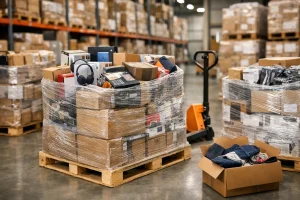
Liquidation Pallets International Shipping from the US: Complete Cost & Logistics Guide 2026-2027
📊 Key Facts
- US liquidation market processes billions in returned merchandise annually from major retailers
- International shipping involves navigating customs, documentation, carrier selection, and cost structures
- Liquidation pallets from Amazon, Walmart, Target sell at steep discounts internationally
- International buyers source Funko Pop, video game, and collectible figure pallets from US
- Cross-border pallet orders require understanding of margins and shipping logistics before purchasing
So you’re outside the US and you’ve spotted the opportunity: American liquidation pallets loaded with electronics, collectibles, accessories, or general merchandise — selling at a fraction of retail. The margins look great on paper. But then reality hits: How does international shipping actually work? What’s it going to cost? What paperwork do I need?
This guide answers all of that, plainly and practically, with no fluff. Whether you’re buying from Canada, the UK, Australia, or Southeast Asia, here’s what you genuinely need to know before wiring money overseas for a pallet of US liquidation stock.
Why International Buyers Are Eyeing US Liquidation Pallets
The US liquidation market is one of the largest in the world. Retailers like Amazon, Walmart, and Target process billions in returned and overstock merchandise annually. That inventory flows into the wholesale market at steep discounts — and international resellers have caught on.
Categories like Funko Pop Pallets, video game pallets, and Labubu Mystery Figure Pallets have international cult followings that make resale in foreign markets genuinely profitable — if you can land the shipment affordably.
The key phrase there is “if you can.” Shipping costs and customs can eat your margin alive if you go in blind.
What Does International Liquidation Pallet Shipping Actually Cost?
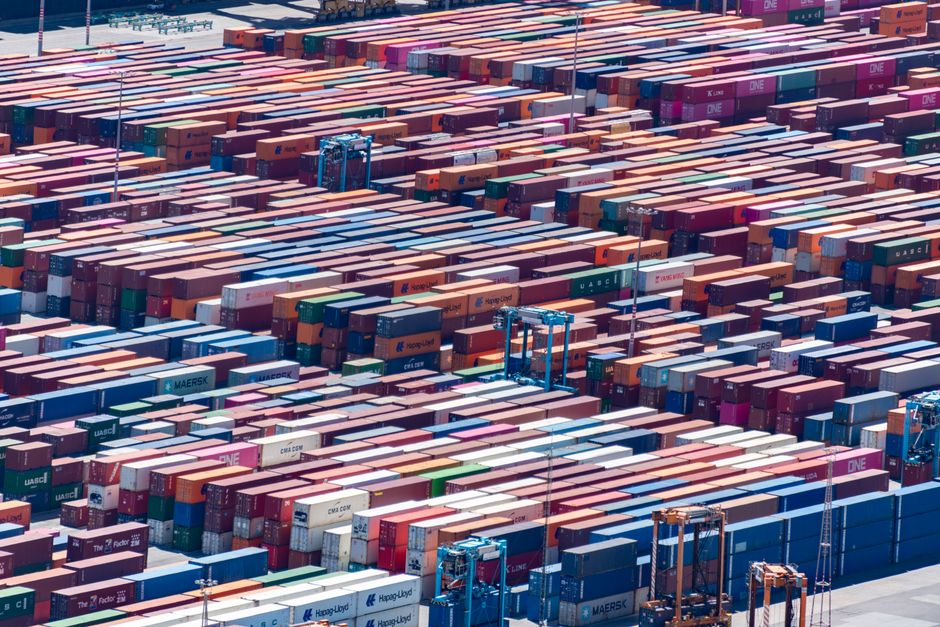
Let’s get straight to the number everyone wants: a typical standard pallet (48″ x 40″, ~1,000–1,500 lbs) shipped from a US port to common international destinations runs roughly:
- USA → UK / Western Europe: $800–$1,400 USD (ocean LCL); $1,800–$3,000+ (air freight)
- USA → Canada: $300–$600 USD (cross-border truck freight is common)
- USA → Australia: $950–$1,600 USD (ocean LCL)
- USA → Southeast Asia: $700–$1,300 USD (ocean, origin port dependent)
⚠️ These are ballpark ocean freight estimates via LCL (Less-than-Container-Load) and don’t include customs duties, destination handling fees, or inland delivery on the receiving end. Always get a full landed cost quote.
Cost components you need to budget for:
- Origin freight – Moving the pallet from the supplier’s warehouse to the US export port
- Ocean or air freight – The core international leg
- Origin port fees – Documentation, handling, and export filing
- Destination customs duties & taxes – Varies by product type and destination country
- Destination port handling – Unloading, inspection, terminal fees
- Last-mile delivery – Trucking from destination port to your door
If a supplier quotes you “international shipping available” and gives you one flat number, push them for a full landed cost breakdown. Vague shipping quotes are one of the most common traps in cross-border liquidation buying.
Freight Forwarding: Your Most Important Partner
Unless you’re a seasoned importer, working with a freight forwarder is non-negotiable for international liquidation pallet orders. They handle the logistics chain between the US supplier warehouse and your door — and critically, they manage customs documentation.
Major international carriers and forwarders to consider:
- DHL Global Forwarding – Strong for smaller pallets and time-sensitive shipments; pricier but reliable documentation handling
- FedEx Freight International / UPS Freight – Better for North American cross-border and select markets
- Flexport, Freightos, or Shifl – Digital freight platforms where you can compare ocean rates across multiple carriers in real time
- Local customs brokers in your destination country — often essential for clearing goods through your home country’s port authority
Pro tip: Some US liquidation suppliers have preferred freight forwarder relationships. Ask if they have an international shipping desk or a recommended logistics partner — it can simplify coordination significantly.
Customs, Duties, and Compliance: What to Expect
This is where most international buyers underestimate complexity. Duties are not a flat rate — they depend on:
- The destination country’s tariff schedule
- The HS code (Harmonized System code) assigned to the goods
- Whether a trade agreement applies (e.g., USMCA for Canada/Mexico; various agreements with UK, EU, Australia)
- The declared customs value of the shipment
For mixed liquidation pallets — which often contain multiple product categories — customs classification becomes tricky. Some forwarders will classify the shipment under the dominant category; others may require itemized manifests.
Key documentation required for international liquidation pallet imports:
- ✅ Commercial Invoice – Lists value, quantity, description, and buyer/seller details
- ✅ Packing List – Itemized breakdown of contents by weight and dimensions
- ✅ Bill of Lading (ocean) or Air Waybill – The transport contract
- ✅ Shipper’s Export Declaration / EEI Filing – Required by US Customs and Border Protection for most commercial exports
- ✅ Certificate of Origin – Sometimes required depending on destination and applicable trade agreements
- ✅ Manifest (if manifested inventory) – Detailed item list; critical for duty calculation accuracy
Missing or inaccurate paperwork is the #1 cause of customs delays. Even a minor discrepancy between invoice value and declared goods can trigger inspections that add days or weeks to delivery.
Manifested vs. Unmanifested Pallets: Why It Matters for Export
This distinction matters a lot more internationally than domestically.
Manifested pallets come with a detailed item-by-item list of what’s inside — SKUs, quantities, estimated values. This is gold for international buyers because:
- Customs agents know exactly what they’re clearing
- You can verify the pallet matches what you paid for before it ships
- HS code classification is cleaner and faster
Unmanifested pallets are mystery loads with a general category description only. Domestically, resellers take that gamble. Internationally, it creates real problems:
- Customs may hold the shipment for inspection
- You can’t dispute the contents if quality is poor — and you’re paying freight to find out
- Duty estimation becomes guesswork
Our strong recommendation: For your first few international orders, only buy manifested inventory. Once you have a trusted supplier relationship and know the customs process in your country, you can experiment with unmanifested loads if the price makes sense.
At Wholesale Pallet Liquidators, you can review available inventory and connect with the team about manifest availability before committing to an international order.
Which Suppliers Actually Ship Internationally?
Here’s an honest truth: many US liquidation suppliers say they handle international shipping, but what they actually mean is “we’ll hand the pallet to your freight forwarder if you arrange one.” That’s not the same thing.
When evaluating suppliers, ask these specific questions:
- Do you have an export team or international shipping desk?
- Will you complete EEI/SED filings for export customs?
- Do you provide manifested inventory with accurate values for customs?
- Can you consolidate multiple pallets at your warehouse before export?
- What ports do you ship from? (Los Angeles, Houston, Miami, and New York/Newark are the major US export hubs)
Suppliers like Via Trading, Direct Liquidation, and B-Stock Solutions have varying levels of international infrastructure. Some serve international buyers well through established freight partnerships; others route everything through the buyer’s own forwarder with minimal export support.
For a broader look at how to vet suppliers for any purchase — domestic or international — check out the Buy Liquidation Pallets Wholesale: 2026-2027 Buyer’s Guide for a detailed framework.
Product Categories: What Ships Well vs. What Gets Complicated
Not all liquidation inventory is equal when it comes to international export. Some categories are genuinely export-friendly; others carry restrictions or compliance headaches.
Generally export-friendly categories:
- Collectibles and toys (Funko Pops, mystery figures, plush)
- Fashion accessories and jewelry
- Non-electronic general merchandise
- Books and media
Categories requiring extra diligence:
- Electronics – May require compliance with destination country’s electrical standards (voltage, certifications like CE in Europe, RCM in Australia)
- Food and supplements – Subject to strict import regulations in most countries; generally avoid in liquidation contexts
- Cosmetics and personal care – Ingredient disclosure requirements vary significantly by destination
- Branded goods – Authentic branded liquidation is fine; anything with IP concerns can be flagged at customs
For international buyers specifically, categories like Bulk Accessories Pallets and collectible pallets tend to be the cleanest from a customs and compliance perspective.
Incoterms: Who Bears the Risk?
Incoterms define who is responsible for freight, insurance, and customs at each stage of the shipment. For international liquidation purchases, the two most common arrangements are:
- EXW (Ex Works): The buyer takes responsibility the moment the pallet leaves the supplier’s warehouse. You arrange everything. Full control, but full responsibility.
- FOB (Free on Board): Supplier handles domestic freight to the port; you handle ocean freight, customs, and everything after.
- DDP (Delivered Duty Paid): The supplier handles everything, including destination customs duties. Convenient, but usually priced at a premium — and rare in the liquidation market.
Most US liquidation suppliers operate on EXW or FOB terms. That means you’re responsible for a significant portion of the logistics chain. Build that into your cost model before you buy.
Delivery Timelines: How Long Does It Actually Take?
Timelines vary based on destination, shipping method, and customs clearance speed. Realistic expectations:
- USA → Canada (truck): 3–7 business days after pickup
- USA → UK/Europe (ocean LCL): 3–6 weeks total (transit + customs)
- USA → Australia (ocean): 5–8 weeks total
- USA → Southeast Asia (ocean): 4–7 weeks total
- Any destination (air freight): 5–10 business days, but at significantly higher cost
Customs clearance alone can add 3–10 business days depending on the destination country’s port workload and whether your shipment is selected for inspection. Factor this into your planning — especially if you’re buying trend-sensitive inventory like collectibles.
Practical Tips for Your First International Pallet Order
- Start with one pallet, not a container. Test the supplier, the freight forwarder, and the customs process before scaling.
- Get a landed cost quote in writing — including all fees through to your door.
- Request a manifest before payment and verify the declared values are accurate.
- Hire a customs broker in your destination country. The cost ($100–$300 typically) pays for itself in avoided delays.
- Insure your shipment. Marine cargo insurance for a $2,000–$5,000 pallet shipment is usually $50–$150. Worth it.
- Communicate with your supplier about export filing requirements — particularly EEI filings for shipments valued over $2,500.
Ready to explore available inventory? Browse the full range at Buy Liquidation Pallets and reach out to the team to discuss international shipping options for your specific destination.
Bottom Line
Liquidation pallets international shipping from the US is absolutely viable — international buyers do it profitably every day. But the margin between a great deal and an expensive lesson is thinner than it looks. Costs, customs, carrier selection, and manifest accuracy all have to align.
Do your homework on landed costs, partner with a good freight forwarder, buy manifested inventory to start, and choose product categories that travel cleanly across borders. When those pieces are in place, US liquidation pallets can be a genuinely competitive sourcing channel no matter where in the world you’re reselling.
Questions about international orders? The team at Wholesale Pallet Liquidators works with buyers across multiple countries and can help you figure out what’s feasible for your destination.