One bad pallet can eat a month of profit. One good pallet can stock your shelves, fill your listings, and keep cash moving. That is why wholesale liquidation pallets matter so much to resellers – not as a trend, but as a real inventory strategy for people who need margin, variety, and a faster path to sellable goods.
If you sell online, run a discount store, stock a flea market booth, or are building a side hustle into something bigger, pallets give you access to inventory at pricing that usually makes sense only at scale. The catch is simple: not every pallet is built for the same buyer, and not every low price turns into a good buy. The real opportunity comes from knowing what moves, what your customers actually buy, and how to match pallet type to your selling model.
Why wholesale liquidation pallets work for resellers
The appeal is straightforward. You buy in bulk at a discount, sort the inventory, and resell item by item or in smaller lots. Your margin comes from the spread between pallet cost and your final resale value, but your speed comes from volume. Instead of chasing single-item deals, you are bringing in a wider inventory base with one purchase.
That matters because most resellers do not lose on one item. They lose on time. Time spent sourcing, time spent driving store to store, time spent piecing together enough inventory to matter. A well-chosen liquidation pallet compresses that work. It gives you more units to list, more variety to test, and more chances to make your money back quickly.
There is also a flexibility factor. Some buyers want mixed general merchandise because they sell across multiple channels. Others want category-specific inventory like tools, toys, beauty, apparel, or household essentials because they already know their audience. Both models can work. It depends on whether you are optimizing for broad turnover or a tighter niche.
What makes a pallet profitable
A profitable pallet is not just cheap. It has to fit your sales channel, your storage setup, your labor capacity, and your average customer order size. New buyers often focus only on the unit count or the original retail value. Experienced buyers usually ask different questions first.
Can the items be listed quickly? Are they easy to test, clean, sort, or bundle? Is there enough demand in your market? If you sell on marketplaces, are the products practical to ship? If you sell locally, are they the kind of items people buy on impulse or need regularly?
This is where category matters. Household essentials, tools, beauty, toys, and small home goods often move faster than products that require deep testing, complex setup, or expensive returns. Electronics can produce strong margins, but they can also create more work and more risk. Collectibles can be great in the right hands, but they are less forgiving if you do not know pricing and condition standards.
The best pallet for one reseller can be the wrong pallet for another. A local discount store may do well with mixed general merchandise because variety drives foot traffic. An online seller may prefer smaller, easier-to-ship items with consistent sell-through. A beginner may do better with products that are simple to identify and price rather than high-risk inventory that looks exciting but ties up cash.
Choosing between mixed and category-specific pallets
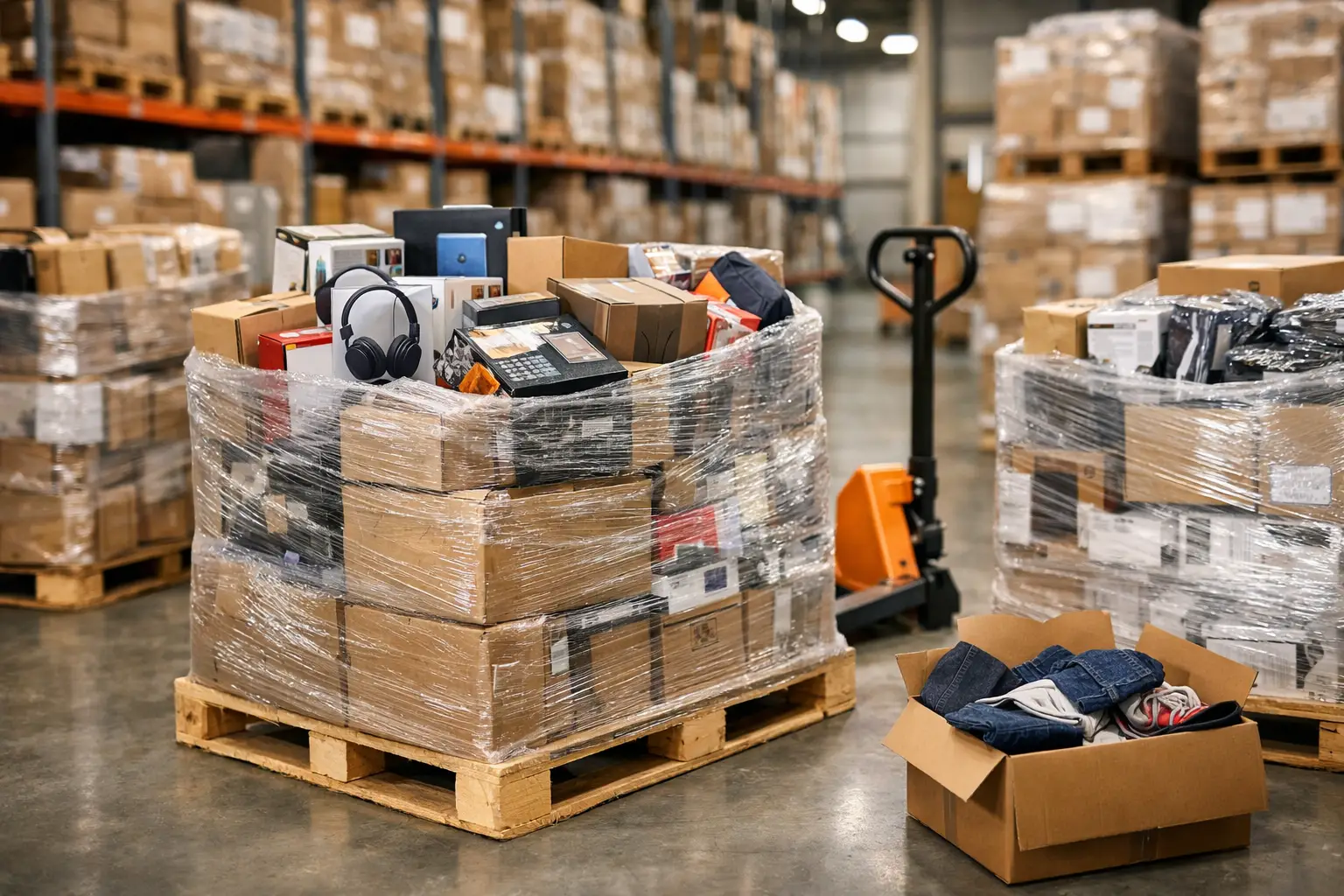
Mixed pallets appeal to buyers who want wider exposure. They can help you test what sells without overcommitting to a single category. They also create more ways to recover value because one weak product group may be offset by stronger items in the same load.
The trade-off is labor. Mixed inventory takes more time to sort, identify, photograph, and list. If your operation is small, that extra handling can slow down your turnover.
Category-specific pallets are usually easier to work through. Pricing is more consistent, listing gets faster, and your customer base is easier to target. If you already know that your buyers want power tools, toys, trading cards, beauty products, or home goods, staying in your lane can be a smart move.
There is no universal winner here. If you are just starting out, a mixed pallet can teach you what your market responds to. If you already have reliable data from past sales, category-specific buys usually make scaling easier.
How to evaluate risk before you buy
The liquidation business rewards smart buyers, not rushed buyers. Before purchasing, think less like a bargain hunter and more like an operator.
Start with condition and manifest details when available. Some pallets are customer returns, some are overstock, some are shelf pulls, and some are closeouts. Those are not small differences. Overstock and closeout inventory are often easier for resale because products may be new and closer to standard retail condition. Customer return pallets can still be profitable, but they usually require more sorting, testing, and write-offs.
Next, be honest about your processing costs. A pallet that looks cheap can become expensive if you need extra labor to test electronics, replace packaging, clean merchandise, or dispose of unsellable items. Freight also matters. Landed cost is the number that counts, not just the sticker price.
Then consider exit strategy. How exactly will these items turn into cash? If your answer is vague, pause. Good inventory should fit a clear resale path, whether that means marketplace listings, live selling, bin store sales, local pickup bundles, or in-store merchandising.
The first pallet mistake beginners make
Most beginners buy too wide, too risky, or too expensive for their first run. They see the word branded, imagine top-dollar resale, and forget that cash flow matters more than headline margins.
A better first move is inventory that turns quickly and teaches the process. Products with simple condition checks, broad demand, and lower return headaches are often the smartest entry point. You want a pallet that helps you learn receiving, sorting, pricing, and selling without turning your garage into a pile of problem items.
That does not mean playing it too safe forever. It means buying your first pallet with repeatability in mind. The goal is not one lucky score. The goal is finding a buying pattern you can use again next month.
Why supplier reliability changes everything
In liquidation, price gets attention, but consistency builds a business. If you plan to resell regularly, your supplier matters as much as the inventory itself.
You want clear purchasing options, dependable communication, secured payment methods, and shipping that moves on time. You also want someone who understands that resellers are not buying for entertainment. They are buying to restock, relist, and recover capital fast.
That is where a reseller-first supplier stands out. The right partner helps buyers choose inventory that fits their business stage, not just whatever happens to be available. For newer resellers, that support can prevent expensive mistakes. For larger buyers, it helps with volume planning, repeat orders, and scaling from pallets to truckloads or even container loads when the demand is there.
At Wholesale Pallet Liquidators, that focus is built around affordable inventory, category variety, secured purchasing, and fast shipping through https://wholesale-palletliquidators.com/. For buyers who need straightforward access to inventory without distributor red tape, that kind of setup matters.
How to turn a pallet into faster cash flow
Buying well is only half the job. The other half is processing inventory fast enough to protect your margin.
When your pallet arrives, sort immediately. Separate obvious winners, easy listers, bundle candidates, and lower-value filler. The faster you identify what should be sold individually versus grouped together, the faster you can start recovering your cost.
Pricing also needs discipline. Not every item deserves maximum resale effort. Some products should be listed at market rate and held. Others should be priced to move quickly. If you try to squeeze every dollar from every unit, inventory can sit too long and tie up capital you need for the next buy.
This is where experienced resellers gain an edge. They do not just ask, what is this worth? They ask, what is the best use of my time on this item? Sometimes the right answer is a premium listing. Sometimes it is a bundle. Sometimes it is clearing lower-value units locally so your better inventory gets full attention.
When it makes sense to scale up
Once you know your categories, your average sell-through time, and your true processing costs, scaling gets less risky. That is when truckloads and larger bulk orders start to make sense. Not because bigger always means better, but because bigger starts to improve your per-unit economics when your systems are ready.
If you are still testing categories, still learning your customer base, or still short on storage, bigger can actually create pressure. More inventory only helps when you can process and sell it efficiently.
For many resellers, the sweet spot is regular pallet buying with a clear restock rhythm. That creates predictability. It helps you keep fresh inventory coming in without overextending cash or space.
Wholesale liquidation pallets are not magic, and they are not risk-free. But for resellers who buy with a plan, they can be one of the simplest ways to build inventory, protect margin, and grow faster without chasing retail arbitrage all week. The best next move is usually not the biggest load – it is the smartest pallet you can turn into cash with confidence.
OUR AVAILABLE PALLETS
Bulk Accessories Pallets For Sales | Wholesale Mixed Accessories
Bulk Accessories Pallets For Sales | Wholesale Mixed Accessories
Funko Pop Pallets | Wholesale Collectible Vinyl Figures
Cheap Wholesale Video Game Pallets
EarPods Pallets Wholesale – Bulk Deals for Resellers
General Merchandise Pallets Wholesale
Wholesale Hunting & Fishing Gear Pallets
Liquidation Power Tool Pallets
Makeup and Beauty Pallets Wholesale
Mixed Electronics Pallet Wholesale
Pokémon Card Pallets Wholesale | Sealed Pokémon TCG Pallets
Sports Card Pallet Wholesale Premium Bulk Trading Cards
Stanley Cups Pallet | Bulk Insulated Tumblers for Resale
Detergent Pallets Wholesale | Bulk Laundry Supplies
Wholesale Kitchen Appliances Pallet