Are Amazon Return Pallets Actually Worth Buying?
So you’ve seen the TikToks. A guy in a garage rips open a cardboard box, pulls out a $900 espresso machine that cost him “like, four bucks,” and screams into the camera like he just found Excalibur. Naturally, you thought: I could do that. And now here you are, Googling “Are Amazon Return Pallets Actually Worth Buying?” at 1 a.m. with a credit card in one hand and a dream in the other.
Good news: you’re not crazy. Bad news: neither is the guy who bought a pallet and got 40 broken vacuum cleaners and a single, judgmental oven mitt.
The truth about Amazon return pallets sits somewhere between “hidden goldmine” and “expensive game of Russian roulette played with cardboard.” In this guide, we’re going to break down the real math, the real risks, and the real reasons people keep buying liquidation pallets anyway — with zero fluff, and just enough sarcasm to keep things interesting. Grab a coffee (not one from the pallet, please, check it first).
What Exactly Is an Amazon Return Pallet, Anyway?
The Short Version
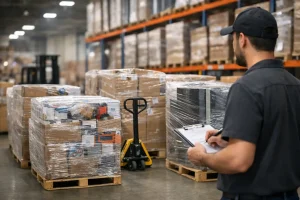
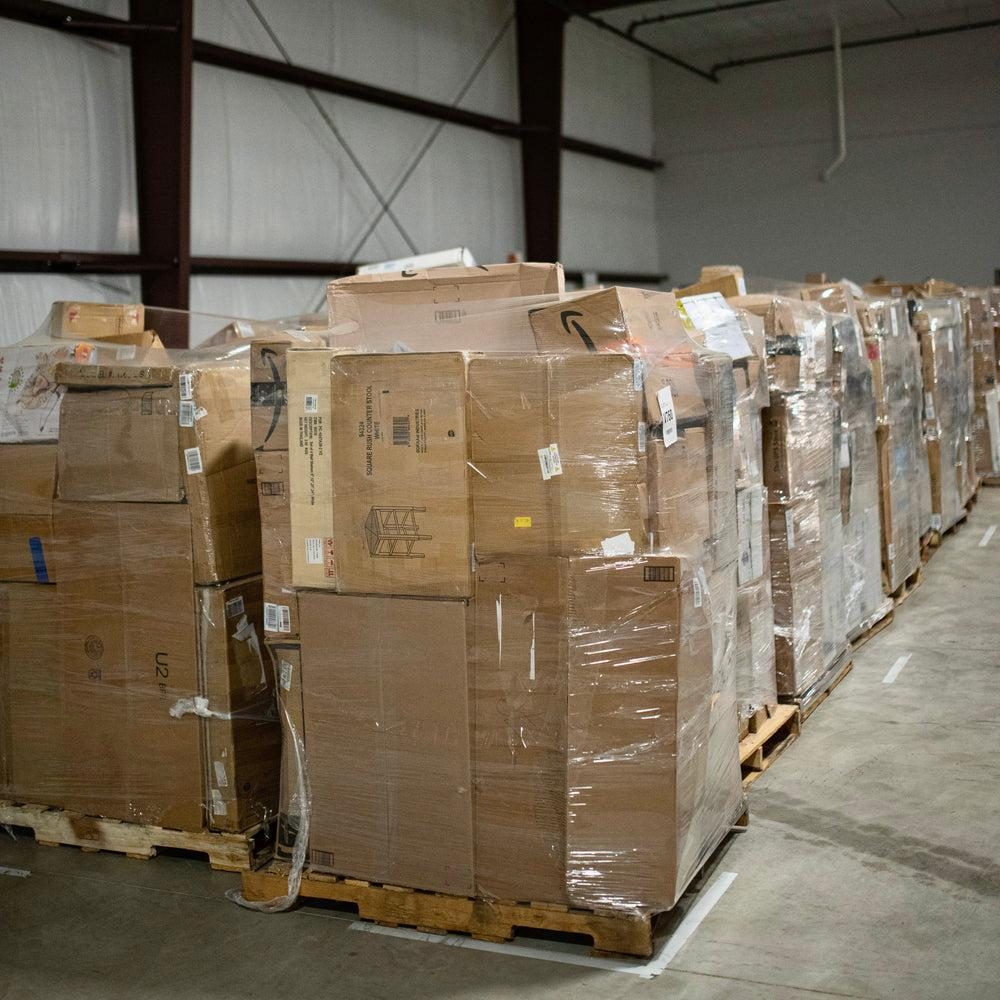
An Amazon return pallet is a shrink-wrapped stack of customer returns, overstock, shelf-pulls, or “why did anyone buy this in the first place” items that Amazon no longer wants cluttering its warehouses. Rather than restocking every single item (which costs more in labor than the item is worth), Amazon bundles hundreds of products together and sells them off in bulk to liquidators, who then sell them to you.
Some items are broken. Some are missing parts. Some are perfectly fine but got returned because someone’s mother-in-law didn’t like the color. That’s the gamble baked into every wholesale liquidation pallets purchase — you’re buying probability, not guarantees.
The Slightly Nerdy Version (Manifests, Categories & Grading)
Serious buyers care about three things before they ever swipe a card:
- Manifested vs. unmanifested pallets — A manifest is an itemized list of what’s supposedly inside. Manifested pallets cost more but reduce guesswork. Unmanifested (“mystery”) pallets are cheaper and far more suspenseful — think of it as a piñata, except sometimes the candy is a broken Bluetooth speaker.
- Condition grading — Categories like “customer returns,” “shelf pulls,” “overstock,” and “salvage” each carry wildly different odds of finding resellable goods.
- Category focus — General merchandise pallets are a grab bag. Niche pallets (electronics, toys, tools, beauty) tend to be more predictable because the failure modes are narrower — an electronics pallet might have dead batteries; it’s not going to have expired shampoo.
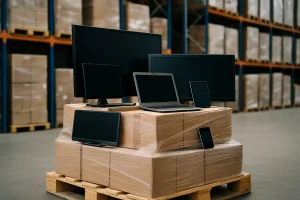
If you want a category with more predictable margins, browsing something like the Mixed Electronics Pallet Wholesale listing gives you a narrower, more analyzable risk profile than a total mystery box.
Are Amazon Return Pallets Actually Worth Buying? The Honest Answer
Here’s the thesis of this entire article, delivered without a single sales pitch: it depends on your tolerance for chaos, your math skills, and whether you actually enjoy sorting through boxes at 11 p.m. like a raccoon with a business plan.
Let’s break down both sides like adults, not hype-men.
The Case FOR Buying Amazon Return Pallets
- Real margin potential. Buy a pallet for $350–$750, and if even 60% of items are sellable at 30–50% of retail, you can profit hundreds of dollars per pallet.
- Low barrier to entry. No warehouse required — a garage, a spare room, or a driveway will do for your first few runs.
- Built-in variety. One pallet can contain enough SKUs to stock an entire weekend flea market table, an eBay store, or a Facebook Marketplace hustle.
- Recurring inventory model. Once you find a reliable supplier, you can reorder the same category (say, toys or tools) every month and build repeat customers who know exactly what you sell.
- It scales. What starts as a side hustle in your garage can become a legitimate resale business with employees, a storefront, and actual quarterly taxes to worry about (congrats, adulthood found you).
The Case AGAINST Buying Amazon Return Pallets
- Some pallets are genuinely bad. Damaged goods, missing parts, and “why is this here” items are part of the deal. Nobody is exempt from a dud pallet.
- Time cost is real. Sorting, testing, photographing, and listing 150 random items takes hours you can’t get back — and time is money, even if TikTok forgot to mention that part.
- Storage space disappears fast. Two pallets in and your living room starts looking like a discount Costco.
- Shady sellers exist. Not every liquidation site is honest about condition or manifest accuracy — this is the single biggest reason people get burned.
- Shipping and logistics add up. Freight costs, forklifts, and delivery windows are not glamorous TikTok content, but they’re very real line items.
Basically: pallet flipping is a legitimate business model, not a lottery ticket — but only if you treat it like one.
How Much Money Can You Actually Make Flipping Pallets?
Let’s do the boring-but-important part: actual math, no vibes.
A Realistic Sample Breakdown
Say you buy a General Merchandise Pallets Wholesale pallet for $350. It arrives with roughly 120–180 mixed items — kitchen gadgets, home goods, the occasional mystery cable that fits nothing you own.
| Category | Estimated Split | Approx. Resale Value |
|---|---|---|
| Fully functional, resellable | 55–65% | 30–50% of original retail |
| Cosmetically damaged but usable | 15–20% | 10–20% of original retail |
| Broken / parts-only | 10–20% | Sold as bulk lots or scrapped |
| Total loss | 5–10% | $0 |
If your $350 pallet contains items with a combined original retail value of $3,000–$4,000 (a common range for general merchandise), and you responsibly resell the usable portion at realistic discounted prices, a profit of $300–$700 per pallet after fees and shipping is a very achievable, non-fantasy outcome.
Best-Case Scenario
You land a pallet heavy on Sports Card Pallet Wholesale Premium Bulk Trading Cards or sealed collectibles like a Wholesale Magic The Gathering Cards Pallet, where individual sealed items retain high collector value. Flip it right, and one pallet can outperform three “normal” ones combined.
Worst-Case Scenario (“The Pallet From Hell”)
You get unlucky. Half the items are damaged, the manifest (if there was one) was optimistic at best, and you spend a weekend sorting garbage bags of what can only be described as “sadness.” This happens. It’s rare with a reputable supplier, common with a sketchy one — which is exactly why who you buy from matters more than what you buy.
The 7 Biggest Myths About Amazon Return Pallets
Let’s torch some myths, TikTok-style, minus the dramatic music.
- “Every pallet is full of brand-new items.” No. Some are. Most contain a mix of conditions — that’s the entire premise of a return pallet.
- “You’ll definitely make thousands on your first try.” Maybe, maybe not. Beginners often break even or lose a little while learning the ropes. That’s normal, not failure.
- “Manifests are always accurate.” They’re a guide, not gospel. Treat them as an estimate, not a receipt.
- “Bigger pallet = bigger profit.” Not necessarily. A smaller, focused pallet (like a Liquidation Power Tool Pallets listing) can outperform a giant mixed pallet with more junk-to-treasure ratio.
- “You need a warehouse to start.” A garage and some folding tables will get you through your first several pallets just fine.
- “All liquidation companies are the same.” They are not. Reputation, sourcing relationships, and transparency vary enormously between suppliers.
- “It’s basically gambling.” It’s closer to buying discounted inventory with variable quality — more “flea market economics” than “casino floor.”
Where Should You Actually Buy Amazon Return Pallets?
Why Big Auction Marketplaces Aren’t Always the Answer
Massive bidding-war auction platforms can drive prices up fast, and bidding wars have a funny way of making a “$300 deal” turn into a “$650 regret.” You’re also often bidding blind against professional resellers with better data than you.
What to Look for in a Trustworthy Wholesale Liquidation Pallets Marketplace
A dependable supplier should offer:
- Clear “Buy Now” pricing alongside offer-based options, so you’re never stuck in a bidding war you didn’t sign up for
- Real photos of actual inventory, not stock images pulled from the internet
- Transparent shipping timelines, both domestic and international
- Multiple secure payment options, including flexible methods for bulk orders
- A support team that answers questions before and after you buy — not just before
This is exactly the model behind sites like wholesale-palletliquidators.com, where you can browse listings, choose “Buy Now” for instant purchase, or make an offer, then track your order with actual human support — instead of throwing money into an auction void and hoping for the best.
Pallet Types Worth Buying: A Field Guide
Not all pallets are created equal, and matching pallet type to your resale strategy is half the battle. Here’s a quick tour of categories worth knowing:
- Collectibles & Trading Cards — High resale ceiling for the right buyer. See the Pokémon Card Pallets Wholesale and Sports Card Pallets Wholesale – Sealed Trading Cards listings — collector demand rarely sleeps.
- Toys & Pop Culture — Perennial resellers’ favorites like Funko Pop Pallets, Hot Wheels Pallet For Sale, the ever-trendy Labubu Mystery Figure Pallets, and the endlessly nostalgic LEGO Pallet Wholesale and Wholesale Mixed Toy Pallets.
- Tech & Gadgets — Higher individual item value, faster turnover. Check the Mixed Electronics Pallet Wholesale, EarPods Pallets Wholesale, and Cheap Wholesale Video Game Pallets.
- Home & Kitchen — Steady, always-in-demand resale category via the Wholesale Kitchen Appliances Pallet and Detergent Pallets Wholesale for the “boring but reliable” crowd.
- Beauty & Lifestyle — Fast-moving small items, great for social selling, like the Makeup and Beauty Pallets Wholesale and viral-favorite Stanley Cups Pallet listing.
- Tools & Outdoor Gear — Higher unit prices, durable goods, less breakage risk, seen in the Liquidation Power Tool Pallets and Wholesale Hunting & Fishing Gear Pallets categories.
- General Merchandise — The classic mystery grab bag, and honestly, the most fun to unbox. See the General Merchandise Pallets Wholesale and Bulk Accessories Pallets For Sales listings.
If your goal is predictable margins, niche categories beat mystery boxes. If your goal is fun and adrenaline, general merchandise is basically a cardboard slot machine — minus the flashing lights, plus more bubble wrap.
Red Flags: When to Walk Away From a Pallet Deal
- No photos of actual inventory — only stock images or nothing at all
- Pressure to “buy now before it’s gone” with zero details on condition
- No return or refund policy whatsoever
- Vague or missing shipping information
- Prices that feel suspiciously too good to be true (they usually are)
- No verifiable contact information or customer support
If a supplier can’t answer basic questions confidently, that’s your cue to close the tab.
How to Flip Your Pallet Once You Have It (Mini Guide)
Step 1: Sort Everything Immediately
Separate into three piles: sellable as-is, needs cleaning/repair, and scrap/parts. Don’t skip this — mixed piles create chaos and missed inventory.
Step 2: Price Strategically, Not Emotionally
Research actual sold prices (not just listed prices) on resale platforms. Price 20–40% under typical retail to move inventory quickly rather than sitting on it for months.
Step 3: Choose the Right Sales Channel
- Facebook Marketplace / local flea markets — great for furniture, kitchenware, and bulky items
- eBay / online marketplaces — ideal for collectibles, electronics, and trading cards
- Bundle and bulk-lot — for damaged or low-value items, sell as “as-is” lots rather than individually
Step 4: Reinvest Smart
Once you’ve found a category that consistently performs (say, toys or electronics), consider reordering similar pallets to build a repeatable, predictable resale system rather than starting from scratch every time.
Amazon Return Pallets vs. Other Liquidation Sources
| Factor | Amazon Return Pallets | Big Auction Liquidation Sites | Random Online Marketplaces |
|---|---|---|---|
| Pricing model | Buy Now + offers | Competitive bidding, prices can spike | Varies wildly, less regulated |
| Transparency | High with reputable sellers | Moderate | Low to moderate |
| Beginner friendliness | High | Moderate | Low |
| Support during/after purchase | Available with direct sellers | Limited, ticket-based | Rare |
| Shipping flexibility | Local + international options | Regional restrictions common | Inconsistent |
Frequently Asked Questions
Are Amazon return pallets actually worth buying?
Yes — for buyers who research suppliers, understand condition variability, and treat it as a resale business rather than a guaranteed jackpot. Profitability depends heavily on supplier reliability and your willingness to sort, price, and sell efficiently.
How much does an Amazon return pallet cost?
Prices typically range from around $300 to $2,500+, depending on category, size, and item value — niche collectible pallets often sit at the higher end, while general merchandise pallets are usually more affordable entry points.
What’s the average profit margin on a liquidation pallet?
Many resellers report profit margins between 20% and 100% per pallet, though results vary significantly based on sorting effort, pricing strategy, and the specific category purchased.
Can beginners make money flipping Amazon return pallets?
Absolutely, though beginners should start small, choose a focused category (like toys or electronics) rather than general mixed merchandise, and expect a learning curve during the first few pallets.
Is it better to buy manifested or unmanifested pallets?
Manifested pallets reduce guesswork and are safer for beginners, while unmanifested pallets are cheaper and better suited to experienced buyers comfortable with more risk and variability.
Where can I buy reliable wholesale liquidation pallets online?
Look for a marketplace offering transparent pricing, real inventory photos, flexible payment options, and responsive customer support — all signs of a trustworthy wholesale liquidation pallets marketplace rather than a risky guessing game.
Conclusion: So, Are Amazon Return Pallets Actually Worth Buying?
Here’s the unglamorous, refreshingly honest truth: Amazon return pallets are worth buying if you treat the process like a business, not a lottery ticket. The people who succeed aren’t the ones who got lucky once on camera — they’re the ones who picked a reliable supplier, chose a category that matched their skills, sorted patiently, priced smartly, and repeated the process month after month.
Will you occasionally get a dud pallet with a suspiciously large number of broken toasters? Probably. Will a well-sourced pallet from a transparent, reputable seller usually leave you with solid resale inventory and real profit potential? Also probably. The difference between “hidden goldmine” and “expensive cardboard nightmare” almost always comes down to where you buy — not just what you buy.
If you’re ready to actually test the math yourself instead of just reading about it, browse the full range of pallet categories and start with something that matches your resale strengths — whether that’s electronics, toys, tools, or a good old-fashioned mystery box of general merchandise.