You don’t need more “ideas” for reselling. You need inventory you can buy today, list this week, and turn into cash without your margins getting eaten alive by bad product, slow shipping, or mystery loads.
That’s why liquidation pallets for resellers keep winning. When you buy right, a pallet gives you volume, variety, and a lower cost per unit than retail arbitrage – with less running around and more repeatable results.
What liquidation pallets are (and what they aren’t)
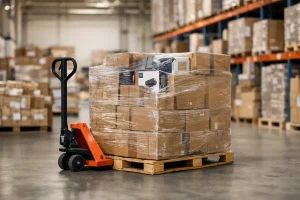
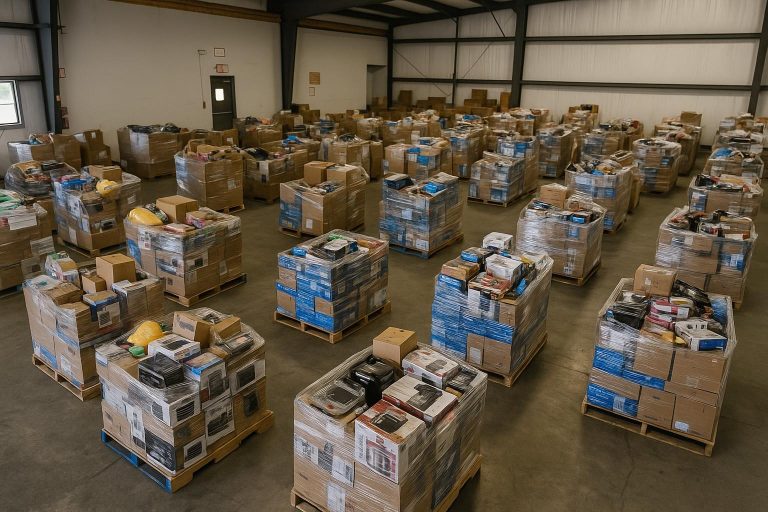
A liquidation pallet is a bulk lot of merchandise sold below retail because a retailer, brand, or distributor needs to move it fast. That can be overstock, shelf pulls, closeouts, customer returns, or packaging changes. The pallet is the “unit” you’re buying – not one item at a time.
What a pallet is not: a guaranteed treasure chest where every item is perfect and every SKU is a home run. Liquidation is a trade-off. You’re buying discount and speed, and in return you accept variation in brands, models, packaging, and condition. The goal isn’t perfection. The goal is predictable margin across the lot.
The smartest resellers treat pallets like a numbers game they can influence. They pick categories they can move, they control their process, and they track results so the next buy is better.
Why liquidation pallets work for reseller margins
Reselling is simple math: (selling price – total costs) x velocity. Pallets help on both sides of that equation.
First, your buy cost per unit is lower. Even if you only sell part of the pallet at strong margins, the winners can carry the slower pieces. Second, you get speed-to-inventory. Instead of hunting ten stores for twenty items, you can receive a single pallet and create dozens of listings.
There’s also an underrated advantage: variety. If you sell on multiple channels, a mixed pallet lets you test what moves without committing to one SKU. If you run a local store or flea market table, variety increases basket size and impulse buys.
The trade-off is operational. You need space, basic sorting discipline, and a plan for the bottom 10-20% of items that won’t sell quickly.
Picking the right pallet: start with your sales channel
The best pallet is the one that matches how you already sell.
If you sell online and ship daily, look for categories that are easy to list and pack: small electronics accessories, beauty, household essentials, toys, collectibles, and certain tools. You’ll usually get better velocity and fewer “where do I store this?” problems.
If you sell locally (storefront, flea market, swap meets, Facebook Marketplace), you can handle more bulky categories like home goods, small appliances, and mixed general merchandise. Local selling also helps you move items that are expensive to ship or prone to returns.
If you’re newer, avoid categories where testing and condition grading can burn you. Some electronics can be great, but if you don’t have a clear process for testing, chargers, missing parts, and resets, your time cost goes up fast. That doesn’t mean “don’t buy electronics.” It means start with simpler lots, then level up.
Condition and manifests: what to ask before you buy
Two details separate a good pallet decision from an expensive lesson: condition and clarity.
Condition labels vary by supplier, but the idea is consistent. New and overstock lots tend to be cleaner and faster to process. Shelf pulls can be close to new but may have scuffs or missing shrink wrap. Returns can be profitable, but they require more labor because you’ll see open boxes, missing components, and items that need testing.
Then there’s the question of a manifest – a list of what’s in the pallet. A manifest can help you estimate value, but it’s not a guarantee of what you’ll receive item-for-item. In liquidation, counts can be approximate, substitutions happen, and condition can vary. Use manifests as a pricing guide, not a promise.
If you’re buying without a manifest, your edge has to come from the supplier’s consistency and your own ability to sell mixed inventory. Beginners usually do better with more transparency until they build confidence.
A simple profitability check that actually holds up
Before you click buy, you need a fast back-of-the-napkin check that accounts for real costs.
Start with your all-in cost: pallet price + shipping + supplies (boxes, tape, labels) + platform fees + your average return rate. Then estimate your realistic sell-through value, not retail.
If you’re an online seller, the “realistic sell-through value” should be based on sold comps, not asking prices. If you sell locally, base it on what similar items move for in your area and how fast they move.
Finally, be honest about labor. A pallet that looks profitable but takes 20 hours to clean, test, and list can be a worse deal than a slightly smaller margin pallet you can process in 6 hours.
A good rule is to leave room for mistakes. If the numbers only work when everything sells at top dollar, it’s not a deal – it’s a gamble.
How to process a pallet fast (and keep your sanity)
The first 48 hours after delivery matter. If the pallet sits untouched, it becomes stress inventory and you lose momentum.
Set up three zones: keepers (easy wins), maybes (need testing or research), and liquidate fast (low margin, bulky, or slow movers). That last zone is what keeps your business healthy. Not every item deserves an online listing.
Your keepers should get photographed and listed first. You’re trying to generate early cash flow, not build the world’s most organized death pile.
For the maybes, set a timer and limit the rabbit holes. If an item needs a missing part that costs too much, move it to local sales or bundle it. If it’s a common item with a clear market, test it once and decide.
For the “liquidate fast” pile, think bundles, lots, or local clearance. You can also use them as add-on deals in your store or as “buy more, save more” incentives. The goal is to recover cost and free space.
Pricing strategy: sell the winners first, don’t ignore the floor
Liquidation profits usually come from two places: the top 20% of items and the discipline to manage the bottom.
Price your best items competitively so they move. Fast cash reduces risk and funds the next buy. If you try to squeeze every last dollar out of each item, you’ll slow down your inventory cycle – and your effective profit per month drops.
At the same time, set a floor for the slow movers. Decide what you’re willing to accept and how long you’ll hold it. If an item hasn’t moved in 30-60 days, reprice it, bundle it, or move it locally. Stale inventory is expensive, even if it’s “paid for.”
Mistakes that crush new resellers (and how to avoid them)
The biggest mistake is buying a pallet that doesn’t match your selling model. A heavy pallet full of bulky items can be fine for a local seller, and a nightmare for a ship-from-home seller.
The second is underestimating shipping. Even “cheap pallets” get expensive if freight costs spike or you don’t have the right delivery setup. Always confirm how shipment is handled and what your receiving plan is.
The third is chasing one huge score instead of building repeatable buys. Consistency beats lottery thinking. When you find a category mix you can process quickly and sell through reliably, your business becomes easier to scale.
Finally, don’t ignore customer expectations. If you’re selling returns or open-box items, disclose condition clearly. That protects your account health on marketplaces and reduces refunds.
Scaling from one pallet to weekly inventory
Once you have a process, scaling isn’t complicated, but it is disciplined.
Track your results by category: purchase price, shipping, time to process, sell-through rate, and average net profit per item. After 2-3 pallets, you’ll see patterns. Some categories will surprise you in a good way. Others will look great on paper but move too slowly.
Scaling also means improving your outlet mix. Online is great for higher-value items. Local sales are great for bulky or low-margin items. If you can use both, you’ll recover more of each pallet and reduce the “dead inventory” problem.
When you’re ready for bigger buys, cash management becomes the game. Don’t tie up all your capital in one load unless you have the space and sales channels to move it. The best resellers buy what they can turn.
Where to buy liquidation pallets you can build on
In liquidation, the supplier relationship matters as much as the pallet itself. You want clear expectations, responsive support, secured payment options, and shipping that doesn’t turn into a month-long headache.
If you want a reseller-first storefront with pre-built pallets across multiple categories and the ability to scale into bulk orders, Wholesale Pallet Liquidators is built around that model – quick purchasing, fast shipping, and guidance when you’re choosing lots or ordering bigger quantities.
The best buying decision is the one you can repeat. When your supplier can consistently deliver inventory that matches the listing effort and demand in your market, your reselling stops feeling like scrambling and starts feeling like operations.
If you’re serious about making liquidation work, pick one pallet that fits your space and your sales channel, process it within 48 hours, and let the results tell you what to buy next.
OUR AVAILABLE PALLETS
Bulk Accessories Pallets For Sales | Wholesale Mixed Accessories
Bulk Accessories Pallets For Sales | Wholesale Mixed Accessories
Funko Pop Pallets | Wholesale Collectible Vinyl Figures
Cheap Wholesale Video Game Pallets
EarPods Pallets Wholesale – Bulk Deals for Resellers
General Merchandise Pallets Wholesale
Wholesale Hunting & Fishing Gear Pallets
Liquidation Power Tool Pallets
Makeup and Beauty Pallets Wholesale
Mixed Electronics Pallet Wholesale
Pokémon Card Pallets Wholesale | Sealed Pokémon TCG Pallets
Sports Card Pallet Wholesale Premium Bulk Trading Cards
Stanley Cups Pallet | Bulk Insulated Tumblers for Resale
Detergent Pallets Wholesale | Bulk Laundry Supplies
Wholesale Kitchen Appliances Pallet