
How Do Professional Flippers Source Liquidation Pallets? (Without Dumpster Diving in a Suit)
Focus keyphrase: How Do Professional Flippers Source Liquidation Pallets
Suggested title tag (58 characters): How Do Professional Flippers Source Liquidation Pallets?
Meta description (156 characters): How do professional flippers source liquidation pallets? Learn the real industry methods, connections, and math that turn mystery boxes into repeat profit.
Suggested URL slug: /how-do-professional-flippers-source-liquidation-pallets/
How Do Professional Flippers Source Liquidation Pallets?
Every flipper’s origin story starts the same way. Someone watches a video of a pallet being unwrapped like a Christmas present and thinks, “I could do that for a living.” Then they discover that the people who actually make money from liquidation aren’t guessing. They’re buying like grocery buyers, not lottery players.
So, how do professional flippers source liquidation pallets? They combine three things: reliable supply channels, a network of human connections, and a boring spreadsheet that decides every purchase before any money leaves their account. The pallet itself is the last step, not the first.
This guide walks through the industry methods, the relationships behind them, and the math that separates a sustainable business from a garage full of regret. It contains no guru energy and no “secret loopholes.” It has some jokes, because reselling is already stressful enough.
The Short Answer (For People Who Read Menus Backwards)
Professional flippers source liquidation pallets through five main channels:
- Direct retailer liquidation programs. They buy overstock and returns straight from the source.
- B2B auction marketplaces. They bid on manifested lots and truckloads.
- Wholesale pallet liquidators. They buy fixed-price pallets by category.
- Brokers and jobbers. These intermediaries connect buyers to supply that never gets publicly listed.
- Local warehouses and closeout events. They buy in person, inspect first, and skip a chunk of freight cost.
The pros then add repeat relationships, category focus, and cost-per-item math to every one of those channels. Skip the last three and the first five become an expensive hobby.
What Exactly Is a Liquidation Pallet? (A Quick Vocabulary Lesson)
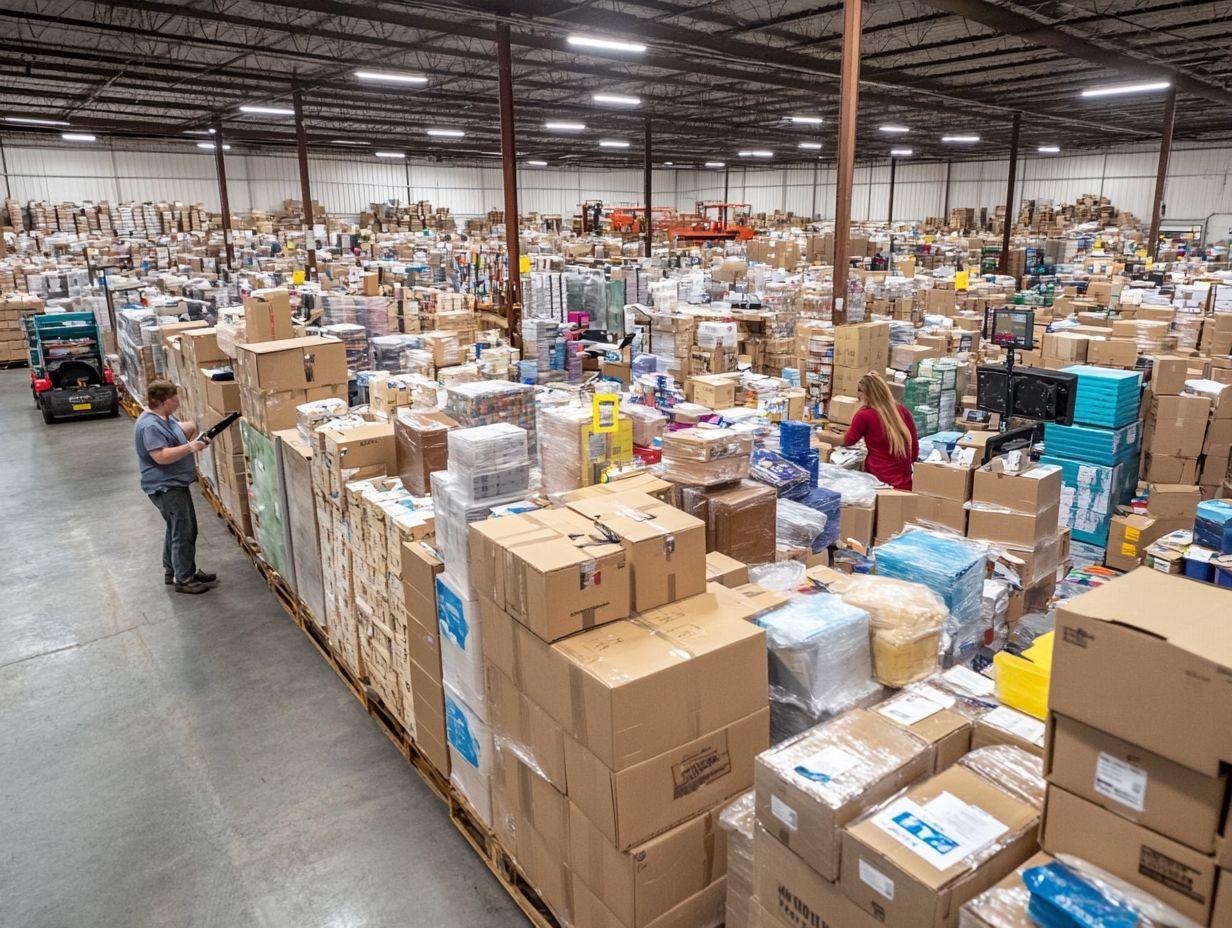
A liquidation pallet is a wrapped stack of merchandise that a retailer, manufacturer, or e-commerce seller has decided to move in bulk instead of one shelf at a time. The seller wants speed and space. The buyer wants margin. Everyone gets something, and nobody gets a parade.
Where the Merchandise Comes From
The stock usually falls into a handful of buckets:
- Customer returns. Items shipped back for any reason, from “wrong size” to “looked different in my imagination.”
- Overstock. Inventory a retailer bought too much of and needs to clear.
- Shelf pulls. Items removed from stores to make room for seasonal resets.
- Closeouts. Discontinued or end-of-line products.
- Liquidated inventory. Goods from businesses that are downsizing or shutting down.
Manifested vs. Unmanifested: The Great Transparency Debate
A manifested pallet comes with an item list, so you know roughly what’s inside. An unmanifested (mystery) pallet doesn’t. Manifested lots typically cost more per unit because you’re paying for information. Unmanifested lots cost less but demand more experience, because “surprise!” is charming at birthday parties and less so on a profit-and-loss statement.
Why This Matters for Sourcing
Professionals pick the format based on their category knowledge. If you know electronics cold, an unmanifested electronics lot is a calculated risk. If you don’t, a manifest is your seatbelt.
A Tiny Rule That Saves Big Money
Never buy the format you can’t price. If you can’t estimate resale value within a reasonable range, don’t bid yet.
Industry Methods: How the Pros Actually Buy
Here’s the part you came for. Each method below is a real route professionals use, and most professionals use several at once so one dried-up supply line doesn’t end their business.
Method 1: Direct Retailer Liquidation Programs
Large retailers and brand owners have to deal with returned and excess goods, and many of them route it through structured liquidation programs, either in-house or with contracted partners. Flippers who qualify get access to volume at earlier stages, often before the goods have been picked over by the general public.
The catch: these programs often want to see that you’re a legitimate business, that you buy in volume, and that you pay on time. Volume gets attention. “Hi, I’m new and curious” gets a polite auto-reply.
Pro move: professionals don’t treat these programs as a lottery. They study pallet composition over time, so they know what a “normal” load from a given source looks like and can spot outliers.
Method 2: B2B Auction Marketplaces
Online business-to-business auction platforms list lots from many sellers. Flippers browse manifests, check condition grading, calculate shipping, and bid.
Why pros like it: transparency, variety, and the ability to filter by category, condition, and location.
Why pros are careful: auctions are where enthusiasm goes to overpay. A bidding war doesn’t care about your margin. Experienced buyers set a hard maximum before the auction opens and treat it like a tattoo: permanent, and best decided while sober.
Method 3: Wholesale Pallet Liquidators With Fixed Pricing
Not every flipper wants to sit in front of a countdown timer at midnight. Fixed-price wholesale suppliers post pallets by category with a stated price and a stated piece count. You see the price, you do the math, you decide.
This method suits people who value predictability. For example, Wholesale Pallet Liquidators lists category pallets with piece counts and prices right on the product pages, which means a buyer can calculate cost per unit before committing. Their shop is here, and the How To Order page explains the process, so you’re not guessing what happens after you click.
A few examples of what fixed-price sourcing looks like in practice, using the listings as posted at the time of writing (always confirm current prices and contents before buying):
- The Makeup and Beauty Pallets Wholesale listing advertises 1,000 assorted items for $350.
- The Mixed Electronics Pallet Wholesale lists 250 pieces for $400.
- The Liquidation Power Tool Pallets listing describes 50 tools from brands such as Milwaukee, DeWalt, and Ryobi for $750.
That’s the point of the method: the numbers are on the table before you commit.
Method 4: Brokers and Jobbers (The Human Search Engines)
A broker doesn’t necessarily own inventory. They own relationships. They know who has excess stock, who wants it gone, and which buyers pay reliably. Some supply never touches a public marketplace because a broker already matched it with a buyer by phone.
How pros use brokers: they give the broker a clear buying profile (categories, budget, delivery region, condition preferences) and become the easy call. Brokers remember buyers who are fast, clear, and don’t argue about invoices.
Method 5: Local Warehouses and In-Person Buying
Some flippers source close to home. They visit regional liquidation warehouses, inspect goods, and negotiate. This route cuts freight costs and lets you see condition firsthand. Nothing beats holding the box, and nothing bruises your dignity quite like the box being much smaller than the photo.
Method 6: Store Closings, Bankruptcies, and Special Events
When a retail chain shrinks or a company shuts down, inventory has to go somewhere, fast. Pros keep an eye on business news and local commercial listings because these events can produce large, motivated-seller opportunities. The trade-off is that timing is unpredictable and cash needs to be ready.
Method 7: Trade Shows and Industry Networking
Wholesale and closeout events bring buyers, sellers, and brokers into one room. Pros attend, listen, collect business cards, and, most importantly, follow up. Most people don’t, which is why the ones who do get the good calls.
The Connections Game: How Professionals Build a Sourcing Network
Every experienced flipper will tell you the same thing in different words: the best inventory goes to the people sellers trust. That means relationship-building is sourcing, not a side quest.
Be the Buyer Everyone Wants to Call
Suppliers remember three qualities in a buyer:
- You pay quickly. Late payments are a personality trait suppliers never forget.
- You communicate clearly. “I want two pallets of small kitchen appliances, delivered to this address” beats a thirty-message thread.
- You don’t dispute everything. Loads vary. Professionals expect variance and budget for it.
Build a Buyer Profile Before You Make Contact
Write one page that answers: What categories do you buy? What’s your typical order size? How do you receive freight? What’s your payment method? Sending that profile turns a cold contact into a warm one.
Keep the Relationship Alive Between Orders
Check in when you’re not buying. A short message, a reorder, or a note about what sold well makes you a person, not a purchase order.
A Simple Follow-Up Script (Steal It Freely)
“Hi, this is [Name]. Last month’s mixed electronics pallet moved well. I’m ready to reorder and would also like to see what’s coming in tool categories. What’s your best timing this week?”
That’s it. Short, specific, respectful of everyone’s time.
Specialization Beats Variety
Suppliers lean toward buyers with a clear category focus. If you buy only toys, they’ll call you when toys arrive. If you buy “whatever,” you’re the person they get around to eventually. Many flippers choose a niche such as collectibles, tools, beauty, electronics, or household goods, and then learn pricing, grading, and demand cycles in that niche until it’s second nature.
Ask About Payment and Shipping Options Early
Pros know cash flow is oxygen. Before ordering, they confirm accepted payment methods, freight arrangements, and lead times. On the supplier side, Wholesale Pallet Liquidators’ Payment page and Shipping Information page lay out those details, which is exactly the kind of thing to read before you fall in love with a pallet.
Matching Categories to Your Resale Strategy
Professional flippers don’t ask “what’s cheap?” They ask “what sells, to whom, and where?” Here’s how categories tend to map to resale styles, using the fixed-price pallets currently listed at Wholesale Pallet Liquidators. Prices and contents are as shown on the site at the time of writing, so verify before buying.
For the Collectibles and Trading Card Crowd
Collectible categories reward knowledge. If you can tell a common from a chase, you can price accurately. If you can’t, you can learn, but do it on a small budget.
- The Pokémon Card Pallets Wholesale listing describes 35 sealed Pokémon boxes for $2,400, a bigger check that suits buyers who already know the market.
- The Wholesale Magic The Gathering Cards Pallet lists 35 factory-sealed booster boxes for $950.
- Two sports card listings, Sports Card Pallet Wholesale Premium Bulk Trading Cards and Sports Card Pallets Wholesale – Sealed Trading Cards, are each listed at $300 and describe mixed vintage and modern cards across multiple sports.
- For figure collectors, the Funko Pop Pallets listing describes 250 sealed figures for $350, and the Labubu Mystery Figure Pallets are listed at $300.
- Die-cast fans can look at the Hot Wheels Pallet For Sale at $350, and builders at the LEGO Pallet Wholesale at $450.
For Toy, Game, and Family-Market Sellers
- Wholesale Mixed Toy Pallets list 250 sealed toys for $350, a solid fit for gift shops and seasonal sellers.
- Cheap Wholesale Video Game Pallets list 200 assorted board, card, and video game titles for $500.
For Tech and Tool Sellers
- Mixed Electronics Pallet Wholesale is the gadget-and-accessory route.
- EarPods Pallets Wholesale – Bulk Deals for Resellers is listed at $350.
- Liquidation Power Tool Pallets target the trade and DIY market, where brand names carry weight.
For Home, Kitchen, and Everyday-Need Sellers
- Wholesale Kitchen Appliances Pallet lists 100 mixed appliances, including blenders, toasters, coffee makers, and air fryers, for $550.
- Detergent Pallets Wholesale | Bulk Laundry Supplies list 250 pieces for $400, and the listing says orders of two or more pallets ship free.
- Stanley Cups Pallet | Bulk Insulated Tumblers for Resale are listed at $350.
For Generalists, Beauty Sellers, and Outdoor Retailers
- General Merchandise Pallets Wholesale mix electronics, home goods, apparel, toys, and more at $350, and the listing notes that inventory changes frequently.
- Bulk Accessories Pallets For Sales | Wholesale Mixed Accessories list 500 assorted accessories for $350.
- Wholesale Hunting & Fishing Gear Pallets list 200 mixed items for $400, which suits outfitters and outdoor resellers.
If you’d rather see everything in one place, the full shop page lists every category.
The Boring Math That Makes Flippers Rich (Or Less Poor)
Here’s the uncomfortable truth: professional flippers spend more time in spreadsheets than in glamorous unboxing moments. The unboxing is the highlight reel. The spreadsheet is the season.
The Five Numbers Pros Track
- Landed cost. Pallet price plus freight, fees, and any prep supplies.
- Cost per unit. Landed cost divided by usable piece count.
- Sell-through rate. How much of the inventory actually sells, and how fast.
- Platform and payment fees. Every marketplace takes a bite.
- Labor time. Your hours have a price, even if you pay yourself in coffee.
A Hypothetical Example (Not a Promise)
Imagine a pallet with 250 pieces and a landed cost of $450. That’s $1.80 per piece. Now suppose, purely for illustration, that 80% of the pieces are sellable and the average sale price is $8 before fees. The real question isn’t “is $1.80 cheap?” It’s “after fees, shipping to the customer, damage, and time, what’s left?” Flippers run these numbers before buying, using real sold-listing data for their category, and they skip the pallet if the math only works in a fantasy.
Your results will depend on the specific goods, your channels, and your pricing, so treat any example like this one as a template, not a forecast.
Grade Your Sources Like a Teacher (Strict, Fair, Slightly Tired)
Keep a simple log for each supplier: what you ordered, what arrived, how much was sellable, and what it ultimately earned. After a handful of orders, you’ll know which sources are consistent and which ones are just enthusiastic in their photos.
Red Flags Professionals Refuse to Ignore
Experienced buyers have learned, sometimes painfully, to spot these:
- No clear contact information or policies. Look for shipping, returns, and terms pages. Wholesale Pallet Liquidators, for instance, publishes Refund & Return Policy, Terms and Conditions, and Contact pages, which is the kind of paperwork worth reading before ordering.
- Vague descriptions with big promises. If a listing can’t say what category or roughly how many pieces you’re buying, be cautious.
- Pressure to pay before answering basic questions. A legitimate supplier answers questions. Always.
- Prices that make no sense. If a deal looks impossible, ask why.
- No way to verify anything. Check reviews, ask for references, and start small.
Pros also start with a single pallet before scaling. It’s the retail equivalent of ordering one taco before committing to the catering package.
A Step-by-Step Sourcing Playbook You Can Start This Week
- Choose one category you can price with confidence.
- Study sold listings for that category so you know real market prices, not wishful ones.
- Set a per-unit target cost that leaves room for fees, shipping, and mistakes.
- Contact two or three sources across different channels (a fixed-price supplier, an auction platform, and a local warehouse if available).
- Buy one pallet first. Track everything: cost, condition, time to list, time to sell.
- Sort on arrival. Separate sellable, repairable, bundle-worthy, and bulk-lot items.
- Reinvest only what the numbers justify. Scale slowly, and let the data give the orders.
- Stay in touch with your suppliers. Reorder, give feedback, and be easy to work with.
Frequently Asked Questions
How do professional flippers source liquidation pallets for the first time?
Most start small with one category and one or two suppliers. They use fixed-price wholesale suppliers or marketplace auctions, buy a single pallet, and track results before scaling. Building a supplier relationship comes after proving they’re a reliable buyer.
Where can I buy liquidation pallets for resale?
Common sources include direct retailer liquidation programs, B2B auction marketplaces, wholesale pallet liquidators, brokers, and local liquidation warehouses. Each has trade-offs in price, transparency, and competition. Many professionals use a mix.
Are manifested pallets better than mystery pallets?
Neither is automatically better. Manifested pallets give you item-level information and usually cost more per unit, while mystery pallets are cheaper but riskier. Professionals choose based on how well they know the category.
How much money do I need to start flipping liquidation pallets?
It depends on the category. Some pallets are listed in the low hundreds of dollars, while collectible categories like sealed trading card boxes can run into the thousands. Beyond the pallet price, budget for shipping, storage, supplies, and marketplace fees.
How do flippers avoid getting scammed?
They read policy pages, ask questions before paying, verify contact details, check reviews from independent places, and start with a small order. A legitimate supplier can explain what’s in a pallet, how shipping works, and what happens if something goes wrong.
Can I resell liquidation pallet items on Amazon, eBay, or Facebook Marketplace?
Often yes, but rules differ by platform, brand, and product category. Some categories are restricted or require approval, and used or returned items must be listed accurately. Check each platform’s current seller policies before listing.
What’s the biggest mistake new liquidation flippers make?
Buying without doing the math. Enthusiasm isn’t a business plan. Calculating landed cost, cost per unit, fees, and realistic sell-through is what separates repeat profit from a very full garage.
Conclusion: Sourcing Is a System, Not a Stroke of Luck
So, how do professional flippers source liquidation pallets? They treat it like a supply chain. They use several channels, from retailer programs and auctions to fixed-price wholesalers, brokers, and local warehouses. They invest in relationships that turn them into a trusted buyer. And they run every purchase through math that doesn’t care how exciting the photos look.
If you’re ready to test the waters, start with one category you understand and one pallet you can afford to learn from. Browse the full inventory, read the How To Order page, and let the numbers, not the hype, make your first decision.
The pallet is the easy part. The system is the business.