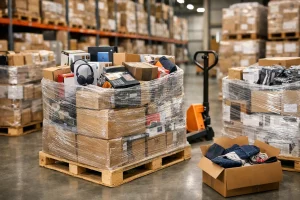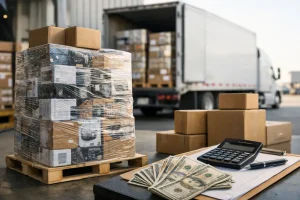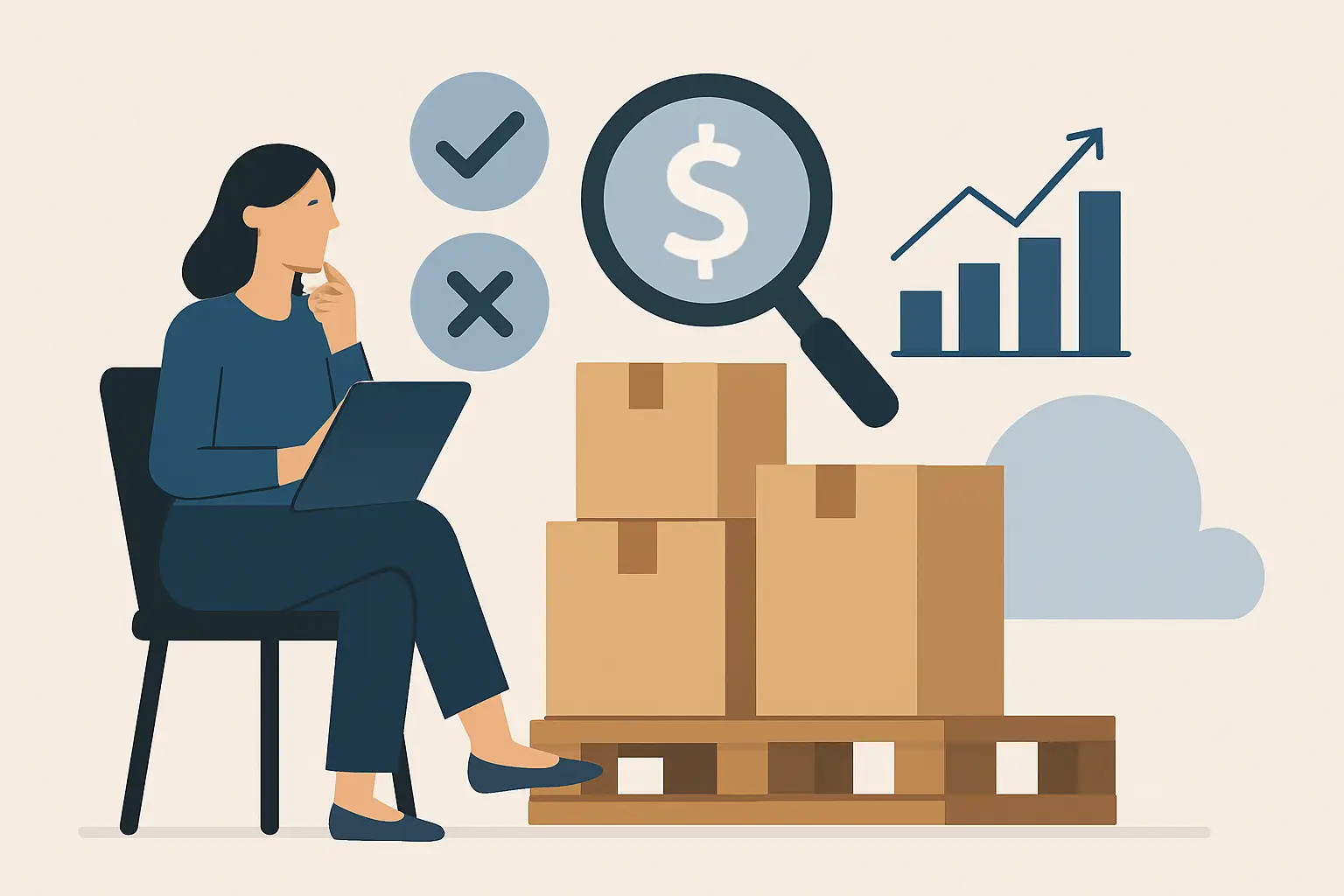
You see a pallet price that looks almost too good to be real. A few hundred bucks for a mixed load of branded goods – the kind of stuff people buy every day. The question isn’t whether you can sell some of it. The real question is whether the numbers work after returns, missing parts, shipping, storage, and the time it takes to list and move inventory.
Are liquidation pallets worth it?
They can be – when you buy with a plan and match the pallet type to your sales channel.
Liquidation pallets are worth it for resellers who (1) understand condition codes and manifest realities, (2) have a clear way to sell through inventory fast, and (3) know their true costs per unit, including freight and labor. They’re usually not worth it for anyone expecting every box to be “new in retail packaging” or hoping for a quick flip without sorting, testing, and customer service.
This is the business model in one line: you’re trading convenience for margin. Retailers want product gone quickly. You’re stepping in to buy it in bulk, absorb the messiness, and earn profit by breaking it down item-by-item.
The profit math that decides everything
A pallet can look profitable on paper and still lose money in the real world. Before you buy, you want a rough “all-in” number and a realistic sell-through plan.
Start with four basics: your pallet cost, shipping or freight, your estimated sellable rate, and your average net per item (after fees).
If you buy a $500 pallet and pay $250 to get it delivered, you’re in for $750. If you expect 60% of units to be sellable and the rest to be parts, donations, or trash, your sellable items have to carry the whole load. If there are 100 units, maybe 60 are sellable. Now your cost basis is $750 / 60 = $12.50 per sellable unit, before any marketplace fees, packaging supplies, refunds, or your time.
That doesn’t mean it’s a bad deal. It means you need a channel where $12.50 can turn into a healthy net. For many resellers, that’s achievable with the right categories (tools, small home goods, certain beauty, collectible items with demand) and with smart bundling (sets, lots, multi-packs).
The quickest way people get burned is assuming every unit is sellable at full retail. Liquidation is discounted for a reason. Your margin comes from pricing realistically and moving volume.
What actually drives ROI on a pallet
Profit isn’t just about getting a low price. It’s about reducing surprises and increasing speed.
Condition and return types
Most pallets fall somewhere on the spectrum of overstock, shelf pulls, customer returns, and salvage. Overstock and shelf pulls usually have the cleanest path to resale. Customer returns can still be strong, but you should expect a wider spread: new, open box, missing accessories, and occasional non-functioning items. Salvage is a different game entirely unless you have repair skills or a parts buyer.
If you’re new, you generally want fewer variables. That usually means starting with categories where testing is simple and defects don’t destroy value. Household essentials and certain home goods tend to be easier than electronics where a single missing cable can cause a return.
Your selling channel
Your best pallet depends on where you sell.
If you sell online, you’ll win with items that ship easily, have steady demand, and don’t trigger constant “item not as described” claims. If you sell locally, you can move bulky goods and open-box items with less friction because the buyer sees it in person.
A pallet can be “worth it” for a flea market seller and not worth it for an online seller – and vice versa. It’s the same inventory. The difference is how you monetize it.
Your ability to process inventory fast
Liquidation rewards speed. The faster you sort, test, clean, and list, the faster cash comes back so you can reorder.
If a pallet sits in your garage for two months because you don’t have time to process it, your ROI gets crushed. Not just because of storage space, but because your next buy is delayed. The resellers who scale treat processing like a weekly routine, not a someday project.
When liquidation pallets are usually worth it
Liquidation is strongest when you have at least one of these advantages: you can move volume quickly, you have a low-cost fulfillment setup, or you have a niche where even partial units sell.
Category-specific pallets often make the most sense if you already know a market. If you sell tools, a tools pallet lets you test quickly, price consistently, and build repeat buyers. Mixed pallets can be great for new sellers who want variety and learning, but they can also slow you down because every item needs a different listing approach.
It’s also worth it when you can create value through bundling and sorting. Turning a pile of miscellaneous items into organized lots is real labor, but it’s also how you create margin where the next person just sees a headache.
When liquidation pallets are not worth it
They’re usually not worth it if you need guaranteed exact items, exact counts, or perfect packaging. Liquidation is not wholesale distribution with consistent SKUs. It’s opportunistic inventory.
They’re also not worth it if your cash flow is tight and you can’t handle a few slow weeks. Even good pallets can have lag time: testing, listing, returns, and waiting for the right buyer. If you need every dollar back within days, you’ll feel pressure to fire-sale items and you’ll give away the margin.
Finally, they’re not worth it if you don’t have a place to put them. Shipping a pallet is one thing. Living with it is another. If you don’t have a staging area to sort and photograph, it becomes stressful fast.
What to check before you buy a pallet
You don’t need to overcomplicate it, but you do need a quick due diligence routine.
First, get clear on the condition description and what it implies for returns and missing parts. If it’s returns-heavy, assume some percentage won’t be resale-ready without extra work.
Second, understand whether you’re buying manifested or unmanifested. Manifests can help you estimate value, but they’re not a guarantee of condition. Unmanifested lots can be profitable, but they increase variability. Newer resellers usually do better with more transparency.
Third, estimate your true all-in cost: pallet price, shipping or freight, packaging materials, and platform fees. Your best deals can become average deals once freight hits.
Fourth, decide your exit strategies before the pallet arrives. Some items will be great for individual listings. Others should be bundled. A few will be “move it today” items. If you already know how you’ll handle the bottom 20%, the pallet becomes less risky.
Reducing risk without killing your margin
The goal isn’t to remove all risk. The goal is to control it.
Start smaller if you’re learning. One pallet teaches you more than weeks of reading. Track what sells fastest, what gets returned, and what takes the most time to test and list.
Choose categories that match your skill level. If you don’t want to diagnose electronics, don’t start there. If you’re good with tools and parts, you can profit where others pass.
Build pricing discipline. Many resellers lose margin by pricing emotionally: overpricing slow items because they “should be worth more,” then discounting later after months of storage. A better approach is to price for sell-through and let velocity do the work.
And buy from suppliers who answer questions and set expectations clearly. In liquidation, support matters because the details matter.
If you want a straightforward place to start, Wholesale Pallet Liquidators is built around reseller-friendly pallets across major categories, with fast shipping and order guidance so you’re not guessing your way through the process.
The “worth it” test you can use every time
If you want a simple decision filter, ask yourself two questions.
Can I realistically sell at least 70% of this pallet within 30 to 45 days through my current channels?
And if I’m wrong, do I still have a backup plan to recover value from the remaining inventory?
If the answer to both is yes, liquidation pallets are often worth it because your cash cycles back quickly, you learn what to reorder, and your business becomes repeatable.
If the answer is no, the deal isn’t automatically bad – it just means you should change something before you buy: pick a different category, reduce your shipping cost, adjust your selling channel, or start with a smaller order.
The best resellers aren’t the ones who never get a dud item. They’re the ones who can take a mixed pallet, move the winners fast, control the downside on the rest, and keep cash flowing so the next buy is smarter than the last.
Keep your first goal simple: buy inventory you can process quickly, sell through without drama, and reorder with confidence. That’s where liquidation stops feeling like a gamble and starts acting like a business.
AVAILABLE PALLETS
Bulk Accessories Pallets For Sales | Wholesale Mixed Accessories
Bulk Accessories Pallets For Sales | Wholesale Mixed Accessories
Funko Pop Pallets | Wholesale Collectible Vinyl Figures
Cheap Wholesale Video Game Pallets
EarPods Pallets Wholesale – Bulk Deals for Resellers
General Merchandise Pallets Wholesale
Wholesale Hunting & Fishing Gear Pallets
Liquidation Power Tool Pallets
Makeup and Beauty Pallets Wholesale
Mixed Electronics Pallet Wholesale
Pokémon Card Pallets Wholesale | Sealed Pokémon TCG Pallets
Sports Card Pallet Wholesale Premium Bulk Trading Cards
Stanley Cups Pallet | Bulk Insulated Tumblers for Resale
Detergent Pallets Wholesale | Bulk Laundry Supplies
Wholesale Kitchen Appliances Pallet