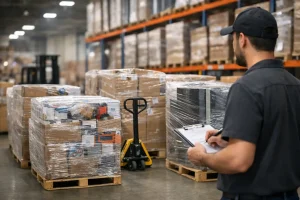
The Select Source vs. Other Liquidation Suppliers
Buying liquidation inventory can feel like opening a mystery box designed by a warehouse manager, an accountant and a mischievous raccoon.
One pallet may contain fast-moving products that sell before your coffee gets cold. Another may contain 200 phone cases for a phone model last seen during the dinosaur era. The difference usually comes down to the supplier’s transparency, pricing, product condition, shipping process and customer support.
That is why comparing The Select Source vs. Other Liquidation Suppliers matters before you spend your inventory budget.
The supplier reviewed here presents itself as a source of wholesale liquidation pallets for online sellers, retail stores, flea-market vendors, discount shops and individual resellers. Its website promotes electronics, toys, tools, cosmetics, collectibles, apparel, home goods and general merchandise. It also advertises local and international shipping, pallet and container-load options, flexible purchasing and support through the order process.wholesale-palletliquidators
Those features may appeal to resellers looking for low-cost stock. However, a serious comparison must look beyond the headline price. The important questions are:
Are the products new, overstock, shelf-pulls or customer returns?
Is the pallet fully manifested at item level?
Can the buyer verify quantities, brands and condition?
Are shipping costs included?
What happens if products are missing, damaged or materially different from the description?
Is payment protected?
Does the supplier offer meaningful after-sales support?
In liquidation, the cheapest pallet is not always the best bargain. Sometimes it is simply the most affordable way to purchase a very expensive lesson.
What The Select Source Offers Buyers
The website positions itself as a broad wholesale supplier rather than a highly specialised auction marketplace. Its stated inventory includes electronics, home goods, apparel, tools, toys, cosmetics, collectibles and general merchandise. The homepage also says buyers can purchase through a “make an offer” approach or buy immediately for faster fulfilment.wholesale-palletliquidators
That model gives buyers several ways to approach inventory sourcing.
Broad product categories
The shop lists a variety of product types, including:
Electronics and accessories.
Toys and games.
Collectibles and trading cards.
Power tools.
Beauty and cosmetics.
Hunting and fishing products.
General merchandise.
Fashion and tech accessories.
The shop page displays example pallet prices ranging from approximately $300 to $2,400, depending on the category and advertised quantity. Examples include Labubu figures at $300, bulk accessories at $350, mixed electronics at $400, power tools at $750 and Pokémon card boxes at $2,400.wholesale-palletliquidators
The variety may be useful for a reseller who wants to test several niches. It may also be dangerous for a beginner who sees every category as an opportunity and ends up with a garage that looks like a department store after an earthquake.
Entry-level price points
Several listed products use relatively simple price-per-pallet offers:
Mixed electronics: $400 for 250 advertised items.
General merchandise: $350 for 200 assorted items.
Hunting and fishing products: $400 for 200 mixed items.
Makeup and beauty: $350 for 1,000 assorted items.
Power tools: $750 for 50 advertised tools.
Funko Pop products: $350 for a pallet of sealed cases.
Hot Wheels: $350 for 300 sealed cases.
Wholesale LEGO: $450 per pallet.
Video games: $500 for 200 assorted games.wholesale-palletliquidators
On paper, these prices can look attractive. A buyer should calculate the true landed cost before estimating profit:
The phrase “sellable units” is crucial. If a pallet advertises 250 pieces but 35 are defective, incomplete, counterfeit, obsolete or too costly to list, the economics change quickly.
Shipping and ordering support
The supplier’s ordering page says customers can browse inventory, submit an order and contact the sales team through channels such as WhatsApp, live chat or email. It also says orders of two or more pallets qualify for free shipping across all 50 U.S. states.wholesale-palletliquidators
That can be valuable for customers who need help choosing a category or arranging delivery. Nevertheless, “free shipping” should always be clarified in writing. Buyers should ask:
Is the shipment delivered by parcel carrier or freight carrier?
Is liftgate service included?
Is residential delivery included?
Is inside delivery excluded?
Does the offer apply to every product?
Is free shipping available to Alaska, Hawaii and U.S. territories?
What happens when a delivery is refused or delayed?
Freight terminology is not glamorous, but it can save more money than a lucky pallet find.
Product Pages and Inventory Links
The following product pages were identified from the supplier’s shop and indexed product listings. Each link is included in bold for internal navigation and SEO value.
Bulk Accessories Pallets for Sale — Advertised as 500 assorted fashion, technology and general accessories for $350 per pallet.wholesale-palletliquidators+1
Funko Pop Pallets in Bulk — Advertised as sealed Funko Pop cases, with the shop describing 300 cases for $350.wholesale-palletliquidators+1
Wholesale Video Game Pallets — Listed as 200 assorted games for $500.
EarPods Pallets for Sale — Promoted as bulk sealed EarPods for retailers and resellers.
Pokémon Card Pallets — Listed as 35 sealed Pokémon boxes for $2,400.
General Merchandise Pallets — Advertised as 200 assorted items, including electronics, home goods, apparel and toys, for $350.wholesale-palletliquidators
Hot Wheels Pallets — Promoted as 300 sealed cases for $350.wholesale-palletliquidators
Hunting and Fishing Pallets — Listed as 200 mixed outdoor items for $400.wholesale-palletliquidators
Labubu Mystery Figure Pallets — Advertised as 200 mixed figures for $300.wholesale-palletliquidators
LEGO Pallets Wholesale — Promoted as assorted LEGO sets and bricks for collectors and resellers.wholesale-palletliquidators
Liquidation Power Tool Pallets — Advertised as 50 tools from brands such as Milwaukee, DeWalt and Ryobi for $750.wholesale-palletliquidators
Makeup and Beauty Pallets — Listed as 1,000 assorted beauty items for $350.
Mixed Electronics Pallets — Advertised as 250 mixed electronics for $400.wholesale-palletliquidators
Sports Card Pallets — Promoted as bulk trading cards and collections for $300.wholesale-palletliquidators
Mixed Toy Pallets — Listed as 250 brand-new, sealed toys for $350.wholesale-palletliquidators
Product availability, quantities, descriptions and prices can change. Before publishing or purchasing, verify each link and confirm that the product page is active.
Inventory and Pricing Comparison
The biggest difference between The Select Source and other liquidation suppliers may be the way inventory is presented.
The reviewed website primarily presents category-based pallet offers with a headline price, product count and general description. For example, the mixed electronics page advertises 250 items for $400 and says the assortment may include earbuds, headphones, chargers, cables, power banks, smart watches, fitness trackers, fans, ring lights and other accessories. It also describes the condition as new, shelf-pull or overstock, depending on the pallet.wholesale-palletliquidators
That is useful as a starting point, but it is not the same as an item-level manifest.
Headline comparison
| Buying factor | The Select Source | Other liquidation suppliers |
|---|---|---|
| Product breadth | Broad categories including electronics, toys, tools, cosmetics and collectibles. | Ranges from specialised suppliers to broad marketplaces. |
| Pricing style | Mainly fixed advertised pallet prices, with some mention of offers. | Fixed prices, auctions, negotiated lots or retailer marketplaces. |
| Item detail | Product pages provide category, quantity and general descriptions. | Some suppliers provide item-level manifests, photos, condition codes and retail values. |
| Condition information | May include new, shelf-pull or overstock, depending on the product. | Stronger suppliers define return, salvage, overstock and tested conditions separately. |
| Shipping | Local, international, freight and container shipping are promoted. | Varies widely; some include freight calculators or buyer-arranged collection. |
| Buyer support | Website states that support is available during ordering and tracking. | May include dedicated account managers, claims procedures and inspection options. |
| Main advantage | Simple browsing and accessible category-level offers. | Greater transparency when manifests and inspection are available. |
| Main risk | Buyers may need more information before calculating exact resale value. | Auctions can encourage overbidding, and some platforms add buyer premiums. |
The wider liquidation market includes platforms that emphasise manifests and direct retailer storefronts. B-Stock, for example, describes its marketplace as a place to buy overstock and returned inventory directly from major retailers, while comparison guides commonly highlight manifests as a central tool for evaluating lots.bstock+1
Other suppliers focus on smaller lot sizes, in-person inspection or fixed-price inventory. Industry directories identify companies such as 888 Lots and Via Trading as examples of suppliers offering flexible lot sizes, manifests or inspection options, although buyers should independently verify current terms.bstalker
Cost per unit is not profit per unit
A pallet with a low unit price may still have a poor resale outcome. Consider the advertised mixed electronics pallet:
Pallet price: $400.
Advertised quantity: 250 units.
Apparent cost per unit: $1.60.
That $1.60 figure looks cheerful. It is practically wearing a tiny party hat. But suppose:
Freight and fees add $150.
Ten percent of products are defective.
Twenty percent sell only at $3.
Thirty percent sell at $5.
The remaining products sell at $8.
Marketplace fees, packaging and returns consume another $250.
The real calculation is very different from simply dividing $400 by 250.
Before ordering, create three projections:
Best case: most products are complete, functional and easy to sell.
Expected case: a realistic mix of winners, slow movers and defects.
Worst case: substantial testing, missing parts, low demand and expensive shipping.
If the pallet only works in the best-case scenario, it is not a business plan. It is a wish wearing spreadsheet clothing.
Pros for Resellers
The Select Source may suit certain types of buyers, particularly those who prefer straightforward fixed-price browsing.
1. Wide category selection
A reseller can explore multiple niches from one website. This may be helpful for discount stores, flea-market sellers and general merchandise businesses that do not need a narrow product range.
2. Simple entry points
Several listed products are priced in the hundreds rather than requiring a full truckload. Smaller commitments can make it easier to test a category before scaling.
3. Product-count-based offers
Many listings state an approximate number of products per pallet. That allows buyers to calculate an initial unit cost and compare categories.
4. Potential shipping convenience
The website promotes local and international shipping, freight and container-load fulfilment. The ordering page also says that orders of two or more pallets qualify for free shipping across U.S. states.wholesale-palletliquidators+1
5. Opportunity for hands-on resellers
A reseller who can test, clean, bundle, photograph and list products may extract value from mixed inventory that is unsuitable for a highly automated operation.
For example, a general merchandise pallet may contain low-value individual items but still work well for:
Bundled discount-store offers.
Flea-market tables.
Mystery boxes.
Seasonal promotions.
Local marketplace sales.
Pop-up shop inventory.
The business model is not “buy pallet, receive money.” It is “buy inventory, process inventory, market inventory, sell inventory, handle customers and repeat until the accounting software stops looking offended.”
Cons and Risks for Resellers
No liquidation supplier comparison is complete without discussing uncertainty.
1. Limited manifest visibility
The product pages reviewed provide quantities and broad product categories, but buyers should confirm whether an item-level manifest is available for the specific pallet. A category description is not a substitute for knowing exact brands, models, quantities and conditions.
For electronics, this is especially important. “Mixed electronics” could include desirable branded devices, low-cost accessories, obsolete stock or products requiring testing.
2. Condition ambiguity
Terms such as “new,” “shelf-pull,” “overstock” and “returns” have different commercial implications. Even “new” products may have damaged packaging, missing accessories, expired warranties or retail restrictions.
Ask for a written condition definition before paying.
3. Brand and authenticity concerns
Branded products, cosmetics, collectibles, trading cards and electronics require extra verification. Resellers should ask how authenticity is established and whether invoices or provenance documents are available.
This matters because marketplace platforms may remove listings, restrict accounts or demand proof of authenticity.
4. Payment risk
The mixed electronics product page mentions Bitcoin payment alongside fast shipping. Cryptocurrency payments can be difficult or impossible to reverse, depending on the transaction and circumstances. A buyer should understand the payment protection available before sending funds.wholesale-palletliquidators
Use caution with any supplier that:
Pressures you to pay immediately.
Refuses ordinary business documentation.
Changes payment instructions unexpectedly.
Requests payment to a personal account.
Cannot provide a verifiable company address.
Avoids written answers about refunds or claims.
5. Shipping uncertainty
Pallets are not oversized parcels. Residential delivery, liftgate charges, appointment fees, storage charges and damage claims can materially affect profitability.
Confirm the full shipping quote and delivery requirements before calculating margin.
6. Inventory may not repeat
Liquidation inventory changes quickly. A successful pallet may not be available again, and a product category may vary considerably from one shipment to the next.
This makes repeatability an important question. A reseller who depends on a steady stream of one specific product should seek a supplier with consistent sourcing rather than relying entirely on opportunistic pallets.
What to Look for in a Liquidation Supplier
Whether you buy from The Select Source or another supplier, use a structured checklist.
Supplier identity
Confirm:
Legal business name.
Physical business address.
Customer-service phone number.
Domain-based email address.
Business registration where applicable.
Written terms and conditions.
Refund and claims policy.
A professional website is helpful, but it is not the same thing as independent verification.
Manifest quality
A useful manifest should ideally show:
Product title.
Brand.
Model or SKU.
Quantity.
Condition.
Suggested retail value, if relevant.
Wholesale or acquisition cost.
Photos of the actual lot.
Any known defects or missing components.
A manifest that says “assorted items” 200 times is more of a motivational quote than an inventory document.
Condition grading
Look for clear definitions such as:
New.
Overstock.
Shelf-pull.
Open-box.
Customer return.
Tested return.
Untested return.
Salvage.
For parts or repair.
Never assume that “liquidation” means “new at a discount.”
Actual lot photos
Stock images are useful for illustrating a category but cannot prove what will arrive. Ask for current photos or a video of the actual pallet, especially when the purchase is expensive.
Transparent pricing
Calculate:
Ask whether the quoted price includes:
Buyer premiums.
Handling fees.
Sales tax.
Freight.
Residential delivery.
Liftgate service.
Insurance.
Customs or import charges.
Claims and inspection process
A supplier should explain:
How many days buyers have to report shortages or damage.
What evidence is required.
Whether unopened pallets may be inspected.
Whether refunds, credits or replacements are possible.
Who carries the risk during shipping.
Whether concealed damage is covered.
Photograph the pallet before opening it and record an unboxing video. It is not glamorous, but neither is arguing about 47 missing chargers without evidence.
Payment protection
Prefer payment methods that provide a documented transaction and appropriate buyer protections. Verify the beneficiary name and payment instructions independently, especially when receiving changes by email or messaging app.
Support quality
Test customer service before buying. Ask specific questions about the manifest, condition, shipping and claims procedure. The quality and speed of the answers often reveal more than a five-star testimonial.
Alternatives With Manifests and Support
A buyer interested in alternatives should match the supplier to the business model rather than searching for one universally “best” source.
Direct retailer marketplaces
Platforms such as B-Stock provide access to retailer liquidation marketplaces, including auctions and buy-now listings. Their appeal is the connection to major retailers and the presence of listing details on many lots.bstock
This model may suit experienced buyers who understand bidding, freight, retailer rules and condition risk.
Flexible independent suppliers
Some independent suppliers focus on smaller lots, fixed pricing, downloadable manifests or in-person inspection. Industry directories list 888 Lots and Via Trading among examples of suppliers that may offer flexible purchase sizes and more detailed inventory information.bstalker
These models can suit beginners who want to test one case or pallet rather than commit to a truckload.
Specialised suppliers
A specialist may be better for a reseller who already understands one niche:
Tools.
Apparel.
Cosmetics.
Electronics.
Toys.
Home improvement.
Collectibles.
Grocery or household goods.
Specialisation can improve product knowledge, listing speed and customer targeting. It can also reduce the number of strange items sitting in your hallway judging you.
Local liquidation warehouses and auctions
Local buying can offer advantages that online purchasing cannot:
In-person inspection.
Lower freight costs.
Same-day pickup.
Easier claims discussions.
Better understanding of local demand.
The trade-off is that local inventory may be inconsistent, and product selection may be narrower.
The Select Source vs. Other Liquidation Suppliers: Final Verdict
The Select Source appears positioned as a broad, fixed-price wholesale pallet supplier with categories suitable for general resellers, online sellers, discount retailers and flea-market vendors. Its website highlights varied inventory, advertised pallet quantities, shipping options, flexible purchasing and order support.wholesale-palletliquidators+1
Its potential strengths are convenience, category variety and accessible price points. Its main evaluation challenge is transparency: before purchasing, buyers should confirm whether the exact pallet includes a verified item-level manifest, actual lot photos, precise condition grades, complete shipping costs and a clearly documented claims process.
Compared with suppliers that publish detailed manifests, permit inspections or operate through established retailer marketplaces, The Select Source may require more direct due diligence from the buyer. That does not automatically make it unsuitable. It simply means the reseller should not rely on headline price alone.
A sensible first order would be:
Choose one category you already understand.
Request the exact manifest and current pallet photos.
Confirm product condition and authenticity.
Get a written landed-cost quote.
Verify payment and refund terms.
Start with a test order rather than a large commitment.
Record delivery, unpacking and product testing.
Calculate actual profit before reordering.
The winning liquidation supplier is not necessarily the one with the cheapest pallet. It is the one that gives you enough reliable information to make a rational purchase, enough support to resolve problems and enough repeatable inventory to build a business.
And if a supplier cannot answer basic questions before taking your money, that is probably not a “mystery pallet.” It is a mystery you are paying to solve.