Liquidation Pallets for Sale: How to Pick the Right One
Walk into any online liquidation marketplace and you’ll see the same overwhelming wall of choices: electronics pallets, toy pallets, general merchandise pallets, trading card pallets, tool pallets — all priced anywhere from $300 to well over $2,000. For a first-time buyer, that wall of options is exciting and terrifying in equal measure. Pick the right pallet and you could double or triple your investment reselling on Facebook Marketplace, eBay, or at a local flea market. Pick the wrong one, and you’re stuck with a garage full of dead stock you can’t move.
The good news: picking a winning liquidation pallet isn’t luck. It’s a skill you can learn in one read-through. This guide breaks down exactly how to match a pallet type to your resale goals, how to compare prices across categories without getting ripped off, how to read a manifest like a pro, which mistakes sink most first-time buyers, and what actually happens between clicking “buy now” and a pallet showing up at your door.
What Is a Liquidation Pallet, Exactly?
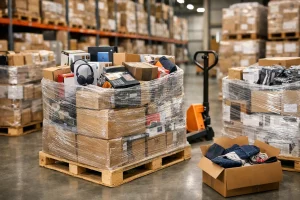
Before comparing options, it helps to be precise about what you’re buying. A liquidation pallet is a shrink-wrapped, palletized batch of customer returns, overstock, shelf-pulls, or closeout merchandise that a retailer no longer wants to carry. Instead of sending it to a landfill, big-box retailers and distributors sell it in bulk to liquidation wholesalers, who then break it into smaller pallet-sized loads and resell it to individuals and small businesses.
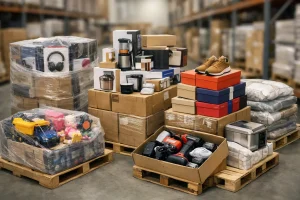
That’s the model behind most wholesale liquidation pallet marketplaces: they source directly from major retailers and distributors, repackage the inventory into pallets by category (electronics, apparel, tools, toys, collectibles, general merchandise, and more), and sell it at a steep discount to the original retail value. The appeal is simple math — if you pay $350 for a pallet with a stated retail value of $2,000–$4,000, you only need to resell a fraction of the items at a fraction of retail price to turn a profit.
But “steep discount” doesn’t automatically mean “profitable.” Profitability depends almost entirely on picking the right pallet for your specific resale plan. That’s the piece most beginners skip.
Step 1: Match Pallet Types to Your Resale Goals
The single biggest mistake new buyers make is choosing a pallet because it looks exciting, not because it fits how they actually plan to sell. Before you even look at prices, answer three questions: Where will you sell this? How much time can you spend prepping and listing? And how much capital can you afford to have tied up in inventory that doesn’t move immediately?
If you’re selling on eBay, Poshmark, or Mercari (item-by-item resale)
You want pallets with high per-unit resale value and recognizable brand names — think mixed electronics, name-brand apparel, kitchen appliances, or power tools. These categories reward buyers who are willing to photograph, list, and ship individual items one at a time. A pallet of wholesale kitchen appliances or a liquidation power tool pallet can produce dozens of individual listings, each with real resale value, and platforms like eBay have built-in demand for these categories.
If you’re selling at a flea market, swap meet, or local marketplace
Volume and visual appeal matter more than individual item value. General merchandise pallets, mixed toy pallets, and accessory pallets work well here because customers browsing a table want variety and low price points they can buy on impulse. You’re optimizing for foot traffic conversion, not maximizing dollars per item.
If you’re targeting collector or hobbyist audiences
Niche category pallets — Pokémon card pallets, sports card pallets, Magic: The Gathering pallets, Funko Pop pallets, Hot Wheels pallets, LEGO pallets, or mystery figure pallets like Labubu — can produce outsized returns because collectors pay premiums for complete sets, rare pulls, and sealed product. These pallets tend to carry higher price tags (some trading card pallets run into the thousands) precisely because a single rare card or sealed box can cover most of the cost. This category rewards buyers who already understand the hobby; it punishes buyers who don’t know what’s actually valuable inside.
If you want fast turnover with minimal listing effort
Consumable or everyday-use categories — cleaning and detergent pallets, beauty and makeup pallets, or earbud and accessory pallets — move quickly because they’re inexpensive, universally needed, and don’t require much explanation to a buyer. Margins per unit are thinner, but turnover is fast, which matters if you’re trying to build cash flow rather than chase big single-item wins.
If you have storage space and want to test wholesale-to-retail arbitrage
Apparel and general merchandise pallets in bulk let you test bundling strategies — selling lots of 5–10 items together to secondhand resellers or local shop owners rather than listing individually. This suits buyers with a garage, storage unit, or booth space who want to move volume rather than manage dozens of individual online listings.
The takeaway: don’t ask “which pallet is the best deal?” Ask “which pallet fits the way I actually plan to turn inventory into cash?” A $2,400 sealed trading card pallet might be a phenomenal deal for a card shop owner and a terrible purchase for someone who only sells at a weekend yard sale.
Step 2: Comparing Prices Across Categories the Right Way
Once you know your lane, the next skill is learning to compare prices intelligently — because raw price tags across categories tell you almost nothing on their own. A $300 pallet and a $2,400 pallet aren’t “expensive” or “cheap” in isolation; what matters is the relationship between purchase price, stated or estimated retail value, and how realistically you can convert that retail value into cash.
Use a price-per-estimated-retail-dollar ratio
A helpful mental shortcut: divide the pallet price by its stated retail value. A $350 pallet with a $2,000 retail estimate is roughly 17–18 cents on the retail dollar. A $750 tool pallet with a $4,500 estimate is about 16–17 cents on the dollar. Categories will cluster around similar ratios — general merchandise and mixed pallets often land in the 10–20% range, while ultra-niche collectible pallets can look “expensive” per pallet but cheap per unit once you know what individual cards, figures, or sealed products are worth on the secondary market.
Compare against realistic resale price, not sticker retail
Retail value on a manifest reflects original shelf price — not what you’ll actually get reselling secondhand, open-box, or “new other” condition items. A safer benchmark is to assume you’ll realistically recover 25–40% of stated retail value across a mixed pallet, once you account for damaged units, unsellable items, and discounted resale pricing. If a pallet’s price is already close to 30–40% of stated retail, your margin for error shrinks fast — you need almost everything to sell well to profit. If the price is closer to 10–15% of stated retail, you have far more room for dead stock, returns, and pricing mistakes.
Price per unit matters as much as price per pallet
Two $350 pallets can be wildly different investments if one contains 40 items and the other contains 150. More units generally means more listings, more shipping labels, and more time — but also more shots at a profitable sale and more resilience if a few items are duds. If you’re short on time, fewer, higher-value units (like an appliance or power tool pallet) may suit you better than a high-count pallet of small accessories.
Factor in category-specific liquidity
Some categories sell faster than others regardless of margin. Electronics and name-brand kitchen appliances tend to move quickly because demand is constant. Seasonal categories (holiday decor, certain apparel) can sit for months if you buy at the wrong time of year. Collectible categories are liquid when the hobby is hot and can stall when trends cool. When comparing prices, weigh how long your capital will be tied up, not just the eventual payout.
Don’t ignore shipping cost in your comparison
A pallet’s true cost is purchase price plus freight. Heavier categories (appliances, tools, detergent) cost more to ship than lighter ones (apparel, cards, accessories). When comparing a $400 pallet against a $550 pallet, always run the math with shipping included — a “cheaper” pallet can end up costing more delivered if it’s dense and heavy.
Step 3: Reading the Manifest to Spot the Best Deals
If price comparison is the “how much,” reading the manifest is the “what am I actually getting.” A manifest is the itemized list a seller provides showing what’s supposedly inside a pallet — item names, quantities, condition codes, and estimated retail value per unit. Not every pallet comes with a fully detailed manifest (some general merchandise or mystery pallets are sold “as-is” without one), but whenever a manifest is available, learning to read it properly is the difference between a great buy and an expensive mistake.
Check the condition codes first
Manifests typically classify items using condition categories such as:
- New/Sealed — unopened, retail-ready product
- Like New/Open Box — opened packaging, item untested or lightly used
- Customer Return — returned by a shopper, condition unverified
- Shelf Pull — removed from retail shelves, usually functional but not “new in box”
- Salvage/As-Is — damaged, missing parts, or non-functional; sold for parts or repair
A manifest heavy on “customer return” or “salvage” items should be priced noticeably lower than one dominated by shelf pulls or sealed product. If two pallets are priced similarly but one is mostly customer returns and the other mostly shelf-pulls, the shelf-pull pallet is almost always the better deal.
Cross-reference item names against real resale prices
Don’t take stated retail value at face value. Pick 8–10 line items from the manifest and search recently sold listings on eBay or similar marketplaces to see what those exact items actually sell for used or open-box. This single habit will save you from overpaying more than any other step in the process. If the manifest lists items at MSRP but those same items are selling for 50% of that on the secondary market, recalculate your expected return using real numbers, not manifest numbers.
Watch for red flags in manifest structure
Be cautious of manifests that are vague (“assorted electronics,” “mixed general merchandise”) without item-level detail, especially at higher price points. Vague descriptions aren’t automatically a scam — some general merchandise and mystery pallets are intentionally sold this way at lower price points where the fun is in the surprise — but at higher price tiers, you want specificity. A $750 pallet should come with enough manifest detail that you can verify, item by item, that the math works.
Look at quantity concentration
A manifest showing 40 different SKUs spreads your risk — if a few items are duds, you still have plenty of other listings. A manifest dominated by one or two SKUs concentrates your risk on those items selling well. This matters especially for niche categories: a trading card or collectible pallet manifest that lists specific set names and box counts lets you check current secondary-market prices for those exact products before you buy, which is exactly the kind of verification that separates a smart collector purchase from a gamble.
Ask directly when something is unclear
Reputable liquidation sellers expect questions before a purchase, particularly on higher-ticket pallets. If a manifest line item is ambiguous, or you want more photos of a specific pallet before committing, ask. A seller who works directly with major retailers and stands behind their inventory should have no issue answering manifest questions or providing additional pallet photos before you buy.
Step 4: Avoiding Common First-Purchase Mistakes
Even with the right category and a clean manifest, first-time buyers tend to fall into the same handful of traps. Here’s what to watch for.
Mistake #1: Buying based on excitement, not a plan
Mystery pallets, collectible pallets, and “surprise” mixed lots are genuinely fun to open — but fun doesn’t pay rent. Before you buy, know where each type of item is going to be sold and roughly how long that will take. If you can’t answer “who is my buyer for this specific item” you’re speculating, not investing.
Mistake #2: Ignoring total landed cost
New buyers often compare pallet sticker prices without factoring in freight, packaging materials, marketplace fees, and payment processing fees on the resale side. A $350 pallet that costs $120 to ship and another $60 in eBay/PayPal-style fees across your resale listings needs to generate meaningfully more than $530 in sales just to break even — before accounting for your time.
Mistake #3: Starting too big
It’s tempting to jump straight into a $750–$2,400 pallet because the potential upside looks bigger. For a first purchase, it’s almost always smarter to start with a lower price tier — in the $300–$450 range — to learn how condition grading, manifest accuracy, and your specific resale channel actually perform in practice. Treat your first pallet as tuition, not a jackpot attempt.
Mistake #4: No plan for unsellable items
Even the best pallets include some percentage of damaged, incomplete, or genuinely unsellable items. Budget for this from day one — whether that means a bundle-and-discount strategy, donating dead stock, or reselling “for parts” listings — instead of being surprised when 10–15% of a pallet turns out to be a write-off.
Mistake #5: Not verifying seller reputation and policies
Before your first purchase, check the seller’s return/refund policy, shipping information, and payment options. A trustworthy wholesale liquidation marketplace will publish clear policies on returns, freight timelines, and accepted payment methods (credit card, bank wire for bulk orders, and increasingly cryptocurrency options like Bitcoin for larger transactions). If a seller is vague about any of these before you pay, treat that as a warning sign rather than a technicality.
Mistake #6: Underestimating time investment
Photographing, cleaning, testing, listing, and shipping items individually takes real time. A pallet that looks like a great deal on paper can turn into a break-even project if you underestimate the hours required to actually convert it into cash. Be honest about how many hours per week you can realistically dedicate before committing to a high-item-count pallet.
Step 5: Ordering and Shipping Your First Pallet
Once you’ve chosen a category, verified the manifest, and sized your budget appropriately, the actual ordering process is straightforward — but there are a few things to know so your first order goes smoothly.
Buy Now vs. Make an Offer
Many liquidation marketplaces let you either buy a listed pallet instantly at the posted price or submit an offer for a seller to review. Buying now is the faster route if you’ve already done your manifest and pricing homework and you’re confident in the deal. Making an offer makes sense on higher-ticket pallets, bulk orders of multiple pallets, or when you want to negotiate based on specific concerns you spotted in the manifest (for example, a higher-than-average share of customer-return items).
Payment methods
Standard online orders are typically handled by credit or debit card through the marketplace’s checkout. For bulk or high-value orders, many wholesale sellers also accept bank wire transfers, which can simplify larger transactions and sometimes come with more flexible terms. If you’re planning to scale up to multiple pallets or full truckloads down the road, it’s worth asking a seller directly what payment options are available for bulk purchases before you place your first order.
Confirm shipping method and cost upfront
Liquidation pallets typically ship via freight carrier because of their size and weight, though smaller boxed items can sometimes ship via standard parcel carriers. Before finalizing an order, confirm:
- Whether shipping cost is included in the listed price or calculated separately based on your location
- Estimated delivery timeframe (freight shipments commonly take anywhere from a few business days to two weeks depending on distance)
- Whether the seller offers local pickup, which can save significantly on freight if you’re within reasonable driving distance
- Whether international shipping is available, if you’re located outside the country of origin
A reputable liquidation seller should be able to answer all of these questions clearly before you check out, and many marketplaces list this information directly on a dedicated shipping or ordering page.
Prepare your space before delivery
Freight pallets are heavy and typically require a loading dock, pallet jack, or forklift to unload — or at minimum, enough manpower and space to break the pallet down safely once it arrives. Know before your order ships whether you’ll need to arrange help unloading, and clear enough space in advance to sort inventory by category (sellable, needs cleaning/testing, damaged/salvage) as soon as it arrives.
Inspect immediately and document everything
The moment your pallet arrives, photograph it before breaking the shrink wrap, then again as you unload it. This protects you if you ever need to file a claim about shipping damage or a manifest discrepancy. Cross-check what you received against the manifest as you unpack, flagging any major mismatches right away rather than discovering them weeks later when a return window may have closed.
Start listing quickly
Momentum matters. The sooner you photograph, clean, test, and list your best items, the sooner cash starts flowing back in — which is especially important if you’re planning to reinvest in your next pallet. Prioritize listing your highest-value, easiest-to-sell items first, then work through the rest of the inventory in batches.
Frequently Asked Questions
How much profit can you realistically make on a liquidation pallet? It varies enormously by category, manifest quality, and your selling channel, but a common benchmark for a well-chosen mixed pallet is recovering 2–3 times your purchase price in total resale value over several weeks to a couple of months, after accounting for unsellable items and fees.
Do all liquidation pallets come with a manifest? No. Many general merchandise and “mystery” pallets are sold without a detailed item-level manifest, especially at lower price points, while higher-value and niche category pallets (electronics, tools, collectibles) more commonly include one. Always ask if a manifest is available before buying, especially for higher-ticket pallets.
What’s the best liquidation pallet category for a first-time buyer? Categories with broad, consistent demand and moderate price points — general merchandise, mixed toys, or beauty and accessory pallets — are usually the most forgiving starting point, since they carry lower per-pallet risk while you learn how condition grading and resale timing actually work.
Is it cheaper to pick up a pallet locally instead of having it shipped? Often, yes. Freight shipping on a full pallet can add a significant percentage to your total cost depending on distance and weight. If local pickup is available and you have a way to transport and unload a pallet yourself, it can meaningfully improve your margin.
Final Thoughts
Picking the right liquidation pallet isn’t about finding the single “best” deal on a marketplace — it’s about finding the deal that’s best for you: your resale channel, your available time, your risk tolerance, and your starting budget. Match the category to how you actually plan to sell, run the numbers on price relative to realistic (not sticker) resale value, read the manifest like a checklist rather than a marketing pitch, and go in expecting a few duds so they don’t derail your plan. Start smaller than you think you need to on your first order, learn how your specific category behaves once it lands on your doorstep, and use that experience to buy smarter — and bigger — the second time around.