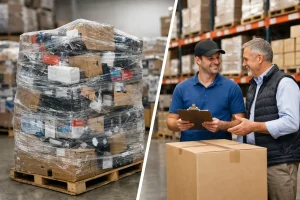
The first time you crack open a liquidation pallet, it feels like Christmas morning and a business audit at the same time. There are wins you can list today, weird one-off items you need to research, and a few pieces that will test your patience. The resellers who make real money aren’t the ones who “get lucky” – they’re the ones who build a repeatable system.
This practical guide breaks down how to resell liquidation items with less risk and faster turnaround, whether you’re flipping on weekends or stocking a full store.
Start with the end in mind: where will you sell?
Liquidation inventory is only a deal if you can move it. Before you buy your next pallet, decide which channel you’re feeding and what that channel rewards.
If you sell on eBay, you can do well with one-off items and open-box goods because buyers expect variety and you can run auctions or accept offers to keep cash flowing. If you sell on Amazon or Walmart Marketplace, you’ll usually want cleaner SKUs, consistent conditions, and fewer surprises because listing requirements and customer expectations are tighter.
Local resale (Facebook Marketplace, flea markets, swap meets, your own shop) can be the fastest path to cash when items are bulky, lower value, or expensive to ship. The trade-off is that local sales are more time-heavy and often require more negotiation.
A simple rule: choose the channel first, then buy inventory that fits the channel’s strengths.
Pick the right pallet type for your experience level
Beginners often underestimate how much “work” comes with mixed loads. A mixed general merchandise pallet can be a great value, but it’s also the most labor: more research, more varied testing, more listing formats, and more customer questions.
Category-specific pallets (tools, beauty, home goods, toys, electronics) usually create a smoother workflow. Your photos look consistent, your pricing logic gets faster, and you start recognizing what sells without having to look up every single item.
Condition matters just as much as category. New, overstock, shelf pulls, open-box, and customer returns all behave differently. Returns can be profitable, but you’re signing up for testing, parts checking, and occasional losses. New or overstock tends to be more predictable and easier to move quickly.
If your goal is a steady repeat business, buy what you can process consistently, not what looks exciting in the moment.
Do the math the way resellers actually live
A pallet can look cheap and still be a bad buy if you ignore the “hidden” costs. Your real profit shows up after shipping, supplies, platform fees, and time.
Start by estimating a conservative recovery value. Don’t price everything at retail. Assume you’ll discount to move inventory, assume a few items won’t be sellable, and assume you’ll have returns if you sell online.
Then factor in:
- Landed cost (pallet price + shipping or freight)
- Selling fees (marketplace fees, payment processing)
- Shipping labels (if you offer free shipping, it’s still coming out of margin)
- Packaging supplies (boxes, poly mailers, tape, bubble wrap)
- Your time (especially for testing and listing)
If the numbers only work when everything goes perfectly, it’s not a deal. The best loads give you room for reality.
Receive and sort like you’re running a small warehouse
The fastest way to lose money in liquidation is to let inventory pile up unsorted. Cash gets stuck in boxes, you forget what you have, and you start buying more because you think you’re “out.”
When your pallet arrives, set up a simple intake routine:
Unbox and sort into clear groups: list-now items, needs-testing items, parts-missing/salvage, and donate/dispose. Put a hard time limit on testing and research. Some items aren’t worth a 30-minute deep dive.
Next, count what you actually received and compare it to any manifest or expected category mix. Even if you’re buying unmanifested loads, you need your own internal inventory list so you don’t double-sell or lose track.
Finally, store items where you can find them quickly. Speed matters. If you spend 15 minutes hunting for a product every time it sells, your profit per hour drops fast.
Inspect and test without turning it into a science project
Testing is where liquidation profits are made or lost. The goal is simple: confirm condition, confirm completeness, and document it.
For electronics and tools, do the basics every time: power on, check screens, check battery charging, verify key functions, and look for obvious damage. For beauty and health items, confirm seals and expiration dates. For apparel, check sizing tags, stains, and missing buttons.
When something is incomplete, decide quickly whether it’s worth parting out, bundling, or selling “as-is.” There’s a buyer for almost everything, but your listing needs to be honest so you don’t get hit with returns and negative feedback.
A practical habit that saves you: take quick intake photos before you clean or repackage. If a buyer claims damage that was disclosed, you have proof.
Clean up presentation because buyers pay for confidence
Liquidation items often need minor cleanup: dust, sticker residue, messy packaging, or wrinkled fabric. That doesn’t mean you’re “fixing” junk – it means you’re increasing perceived value.
Wipe down hard goods, remove old labels when possible, and use consistent photos. For online sales, good lighting and a plain background beat fancy equipment. For local sales, grouping similar items in a table layout makes your booth or pickup meeting feel more professional.
Your listing should answer buyer questions before they ask: condition, included accessories, model numbers, dimensions for bulky items, and anything you tested.
Price for velocity, not ego
Resellers get stuck when they price liquidation inventory like it’s boutique stock. The advantage you have is discount. Use it.
If you want fast turnaround, price based on sold comps, not active listings. Active listings show what sellers hope to get. Sold comps show what buyers actually pay.
Also be realistic about condition. Open-box and shelf pulls can sell close to retail if they’re clean and complete, but customer returns typically need a bigger discount because buyers assume risk.
A smart approach is to set a “floor” price that protects margin, then experiment with offers or small price drops to move slow items. Cash flow funds your next pallet. Dusty shelves don’t.
Choose the right listing strategy for the item
Not every product should be listed the same way. A high-demand branded item might be perfect as a fixed-price listing with immediate payment. An oddball item might do better as an auction to let the market set the price. Low-dollar items often make more sense as bundles.
Bundles are one of the easiest ways to increase profit per shipment and reduce labor. If you have five similar phone cases, list them as a lot. If you have multiple packs of household essentials, create a value bundle that’s cheaper than retail but still profitable for you.
For local sales, multi-item deals move inventory fast. Think “3 for $20” on small goods, or bundle accessories with a main item to increase perceived value.
Protect yourself with simple policies and documentation
Returns and claims are part of online reselling. The resellers who stay profitable don’t panic – they document and set expectations.
Write clear condition notes. If you tested it, say how. If you didn’t, say that too. If an item is missing a remote, charger, or manual, put it in the first lines of the description.
Pack like the carrier is going to drop it. Use the right box size, pad the corners, and don’t ship fragile items in soft mailers.
And keep basic records: purchase cost, selling price, fees, shipping cost, and net profit. If you don’t measure it, you can’t improve it.
Scale by buying smarter, not just bigger
Once you’ve flipped a few pallets, the temptation is to jump straight to truckloads. Sometimes that’s the right move, but only if your processing and selling capacity can handle it.
Before you scale, make sure you have:
- A steady sales channel that can absorb more inventory
- Space to sort and store without chaos
- A repeatable workflow for testing, photos, and shipping
- A cash buffer for slower weeks
Scaling should reduce your cost per unit and increase your consistency. If it just increases stress, you’re buying too fast.
If you want a consistent supply of reseller-friendly pallets across categories, many buyers start with pre-built loads from a supplier like Wholesale Pallet Liquidators so they can focus on selling instead of chasing one-off deals.
Common mistakes that kill profit (and how to avoid them)
The biggest liquidation mistakes are usually simple. Buying without a plan leads to random inventory that doesn’t match your sales channel. Overpaying happens when you ignore landed cost and assume you’ll get full retail. And slow processing is a silent killer – the longer items sit unlisted, the lower your real ROI.
It also depends on your market. If you’re in a rural area, local buyers may want practical household goods and tools more than collectibles. If you’re in a dense metro area, you can move trendy items quickly but you’ll compete on price.
The goal isn’t perfection. The goal is to learn what your customers buy from you, then keep buying inventory that matches that demand.
A closing thought
Reselling liquidation items is less about finding a magical pallet and more about running clean reps: buy with a plan, process fast, list honestly, and keep your money moving. When you treat every load like a repeatable business decision, your results get predictable – and that’s where real freedom comes from.
OUR AVAILABLE PALLETS
Bulk Accessories Pallets For Sales | Wholesale Mixed Accessories
Bulk Accessories Pallets For Sales | Wholesale Mixed Accessories
Funko Pop Pallets | Wholesale Collectible Vinyl Figures
Cheap Wholesale Video Game Pallets
EarPods Pallets Wholesale – Bulk Deals for Resellers
General Merchandise Pallets Wholesale
Wholesale Hunting & Fishing Gear Pallets
Liquidation Power Tool Pallets
Makeup and Beauty Pallets Wholesale
Mixed Electronics Pallet Wholesale
Pokémon Card Pallets Wholesale | Sealed Pokémon TCG Pallets
Sports Card Pallet Wholesale Premium Bulk Trading Cards
Stanley Cups Pallet | Bulk Insulated Tumblers for Resale
Detergent Pallets Wholesale | Bulk Laundry Supplies
Wholesale Kitchen Appliances Pallet